

What Is a Meta Description? (Boost SEO & CTR in 2026)
A meta description is an HTML tag that provides a concise summary of a web page’s content to search engines and users. Appearing beneath the page title in search results, it acts as a short advertisement that encourages searchers to click through to your website from the results page.
Does a Meta Description Directly Affect SEO Rankings?
The short answer is no, but the long answer is more nuanced. Since 2009, Google has explicitly stated that meta descriptions are not a direct ranking factor in their search algorithm. This means that stuffing your description with keywords will not automatically push your website to the top of the Search Engine Results Page (SERP). However, while it is not a direct signal for ranking, it is a critical component of Search Engine Optimization because it directly impacts your Click-Through Rate (CTR).
When more people click on your link compared to other results, search engines take note. A high CTR suggests to Google that your page is relevant and valuable to users for that specific query. Over time, this user engagement can indirectly improve your rankings. Think of your meta description as the "sales pitch" for your content. Even if you have the best information on the web, if your description is boring or irrelevant, users will skip over you in favor of a competitor who has optimized their snippet. For small businesses, this is often the difference between a lead and a lost opportunity.
How Meta Descriptions Influence Your Click-Through Rate
Your meta description serves as the first touchpoint between your brand and a potential customer. In a sea of blue links, the text following your title is what convinces a user that you have the answer they are looking for. Writing compelling descriptions is an art form that blends data-driven SEO with human-centric marketing. For local businesses in Maryland or across the country, this is your chance to showcase your unique value proposition before a user even lands on your site.
To maximize CTR, consider these psychological triggers:
- Relevance: Directly address the user's search query.
- Urgency: Use action-oriented language to prompt immediate clicks.
- Benefit: Clearly state what the user will gain by reading the page.
- Trust: Mention years of experience or specific credentials.
- Clarity: Avoid jargon that might confuse the average searcher.
By focusing on these elements, you transform a technical HTML attribute into a powerful conversion tool. This is a foundational step in digital marketing and advertising that many businesses overlook, yet it requires no budget other than the time to write a few thoughtful sentences.
What Are the Key Elements of an Effective Meta Description?
An effective meta description is more than just a summary; it is a strategic piece of micro-copy. To ensure it performs well in 2026, you must balance technical constraints with creative messaging. The goal is to provide enough information to satisfy curiosity while leaving enough unsaid to encourage a click. If you provide the entire answer in the snippet, the user may not feel the need to visit your site, which is why a balance is necessary.
Every description should follow a standard checklist to ensure it meets modern search standards:
- Unique Content: Every page on your site must have a unique description to avoid internal competition.
- Target Keywords: Include your primary keyword once naturally; Google often bolds these in the results.
- Active Voice: Use verbs like "Learn," "Discover," "Get," or "Find" to drive action.
- Call to Action (CTA): Invite the user to take the next step, such as "Read our guide" or "Contact us today."
- Alignment with Intent: Ensure the description matches what is actually on the page to reduce bounce rates.
What Is the Recommended Length for Meta Descriptions in 2026?
While search engines can display longer snippets, the general rule of thumb is to keep your meta description between 150 and 160 characters . For mobile devices, this limit is often shorter, around 120 characters. If your description exceeds these limits, Google will truncate the text with an ellipsis (...), which can cut off your call to action or crucial information. Our team at adPRO always recommends placing the most important information and the primary keyword within the first 120 characters to ensure visibility across all devices.
However, do not be afraid to write slightly shorter descriptions if they are punchy and clear. A 100-character description that is perfectly written is far better than a 160-character description filled with "fluff" just to meet a limit. This attention to detail is a hallmark of professional website design and content strategy. When we build sites for our clients, we treat every meta tag as a critical piece of the user experience, ensuring that the transition from Google to the website feels seamless and intentional.
How Does AEO Influence Your Metadata Strategy?
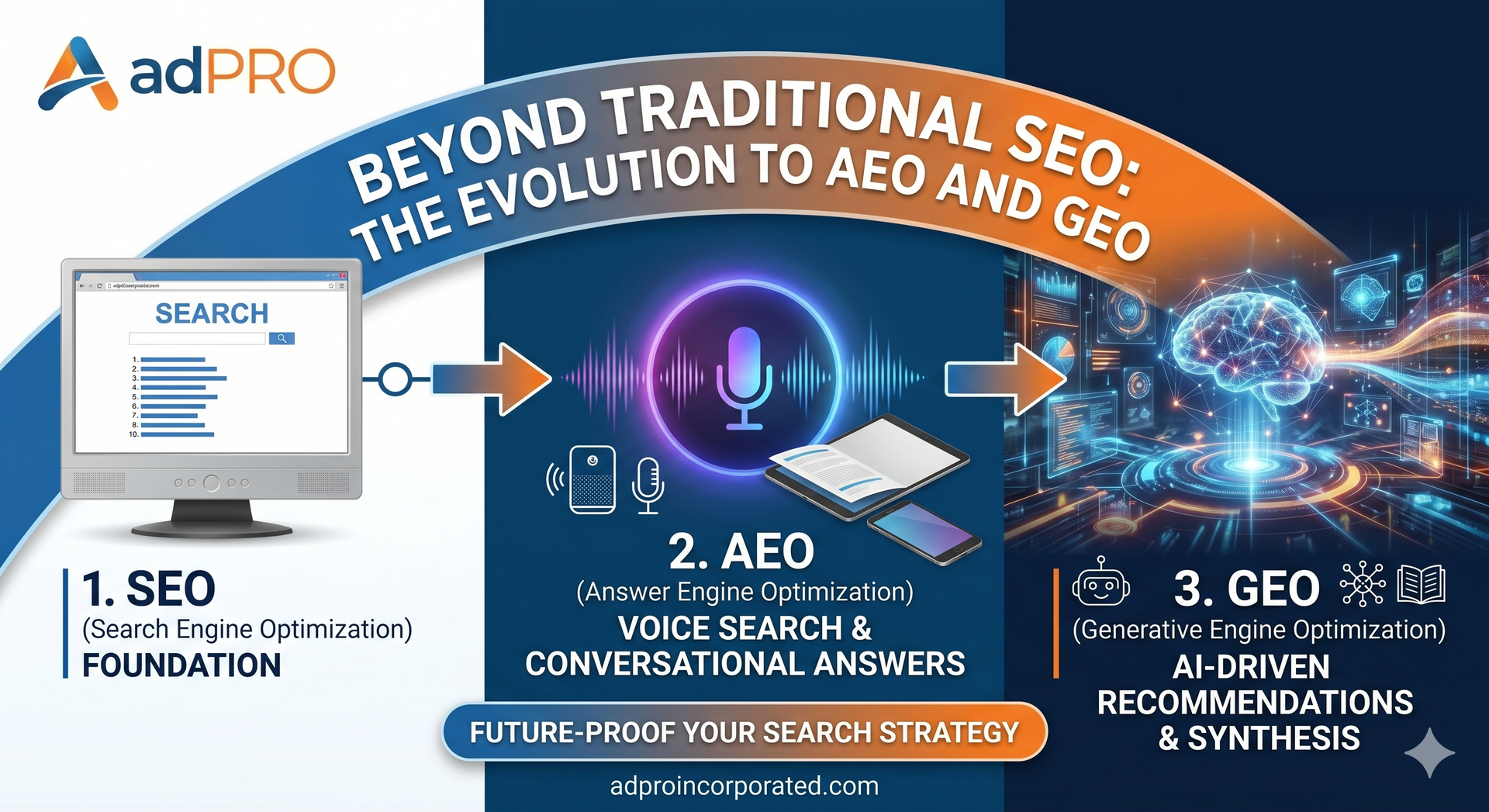
As AI-driven search—often called Answer Engine Optimization (AEO)—becomes more prevalent, the role of metadata is shifting. AI models like Google’s Gemini or Perplexity use metadata to understand the context and "aboutness" of a page. While they may not always display your meta description verbatim, they use it as a signal to determine if your content is a credible source for an AI-generated answer.
To optimize for AEO, your meta descriptions should be highly factual and structured. Instead of being purely promotional, they should provide a clear, high-level summary that an AI can easily parse. This synergy between traditional SEO and AEO and GEO optimization ensures that your business stays relevant whether a user is using a standard search bar or a voice assistant.
Why Does Google Sometimes Show a Different Meta Description?
It can be frustrating to spend time crafting the perfect meta description only to see Google display a different snippet in the search results. This happens because Google’s primary goal is to provide the most relevant answer to a user's specific query. If Google’s algorithm determines that a specific sentence from your body text better matches what the user searched for, it will dynamically generate a snippet using that text instead of your meta description.
Common reasons Google might ignore your description include:
- The description is a duplicate of another page on your site.
- The description does not accurately reflect the content of the page.
- The search query is very specific and better answered by a sub-section of your text.
- The description is essentially a list of keywords rather than a coherent sentence.
Even if Google rewrites your snippet occasionally, having a well-written meta description is still essential. It acts as a fallback and provides a strong signal of what your page is about. For most broad or head-term searches, Google will likely use your provided description if it is high quality. This is why web design for small businesses must include a comprehensive SEO audit to ensure all technical tags are correctly implemented from the start.
Meta Descriptions for Different Page Types
Not all meta descriptions are created equal. The way you write a description for a blog post should differ significantly from how you write one for a service page or a contact page. Tailoring your approach to the user's intent is the key to a high-performing site.
For Service Pages , focus on the problem you solve and your service area. For example: "Expert roofing services in Southern Maryland. Over 25 years of experience in roof repair, replacement, and inspections. Get your free estimate today!"
For Blog Posts , focus on the value of the information provided. For example: "Learn the 10 critical steps to secure your small business website from hackers. Our guide covers everything from SSL certificates to password policies."
For Contact Pages , keep it simple and inviting: "Have questions about your digital marketing strategy? Contact the experts at adPRO today to schedule your consultation and grow your business."
Summary of Meta Description Best Practices
To wrap up, while meta descriptions do not act as a direct lever to pull you up the rankings, they are the gateway to your website. By treating them as a strategic asset, you can increase your traffic without needing to rank higher by simply capturing a larger share of the clicks for your existing positions. This data-driven approach is what separates successful digital strategies from guesswork.
Key Takeaways for Business Owners:
- Prioritize CTR: Focus on writing for humans first and search engines second.
- Stay Within Limits: Aim for 150-160 characters to avoid truncation.
- Be Unique: Never reuse descriptions across multiple pages.
- Use a CTA: Always tell the user exactly what you want them to do next.
- Monitor Results: Check your Google Search Console to see which descriptions are performing well and which need a refresh.
If you are ready to take your online presence to the next level and want a strategy built on research rather than guesswork, contact us today. At adPRO, we have been helping Southern Maryland businesses and clients nationwide win since 1999 by understanding the small details that lead to big results.
It's Your Business, Let's Build it!
We will get back to you as soon as possible.
Please try again later.