

Website Design & SEO News banner with purple laptop, magnifying glass, and analytics charts
June 27, 2026

How to Win at PPC: Why Landing Pages Are Important in 2026

Share this article

A landing page is important for your PPC campaign because it creates a dedicated, distraction-free environment designed to convert visitors into leads. By aligning the landing page content directly with your ad’s specific promise, you improve Quality Scores, reduce costs per click, and significantly increase conversion rates compared to generic homepages.

Why is a landing page important for your PPC campaign?

In the world of digital marketing and advertising , the first impression is often the only impression you get. When a user clicks on a Pay Per Click (PPC) ad, they have a specific intent. They are looking for a solution to a problem, a specific product, or a professional service. If you direct that motivated user to a general homepage, you are essentially asking them to do the work of finding what they were promised in the ad. This friction leads to high bounce rates and wasted ad spend.

Landing pages are critical because they maintain the "scent" of the search. If someone searches for "emergency plumbing in Calvert County" and clicks an ad promising exactly that, the landing page should immediately display emergency plumbing services and a clear contact form. This relevance is the cornerstone of why landing pages are important for your PPC campaign. Since 1999, adPRO has observed that businesses in Southern Maryland and beyond achieve far greater ROI when they stop treating their website as a catch-all and start using targeted landing pages as precision tools.

Key reasons for landing page importance include:

  • Eliminating Distractions: Removing main navigation menus keeps the user focused on the singular goal of the campaign.
  • Message Match: Ensuring the headline on the page matches the text in the ad to build immediate trust.
  • Simplified Path to Conversion: Reducing the number of clicks required for a user to take action.
  • Data-Driven Insights: Landing pages allow for cleaner A/B testing to see which messaging resonates best with your audience.
  • Local Relevance: For businesses in Maryland, a landing page can highlight local expertise that a generic site might bury.
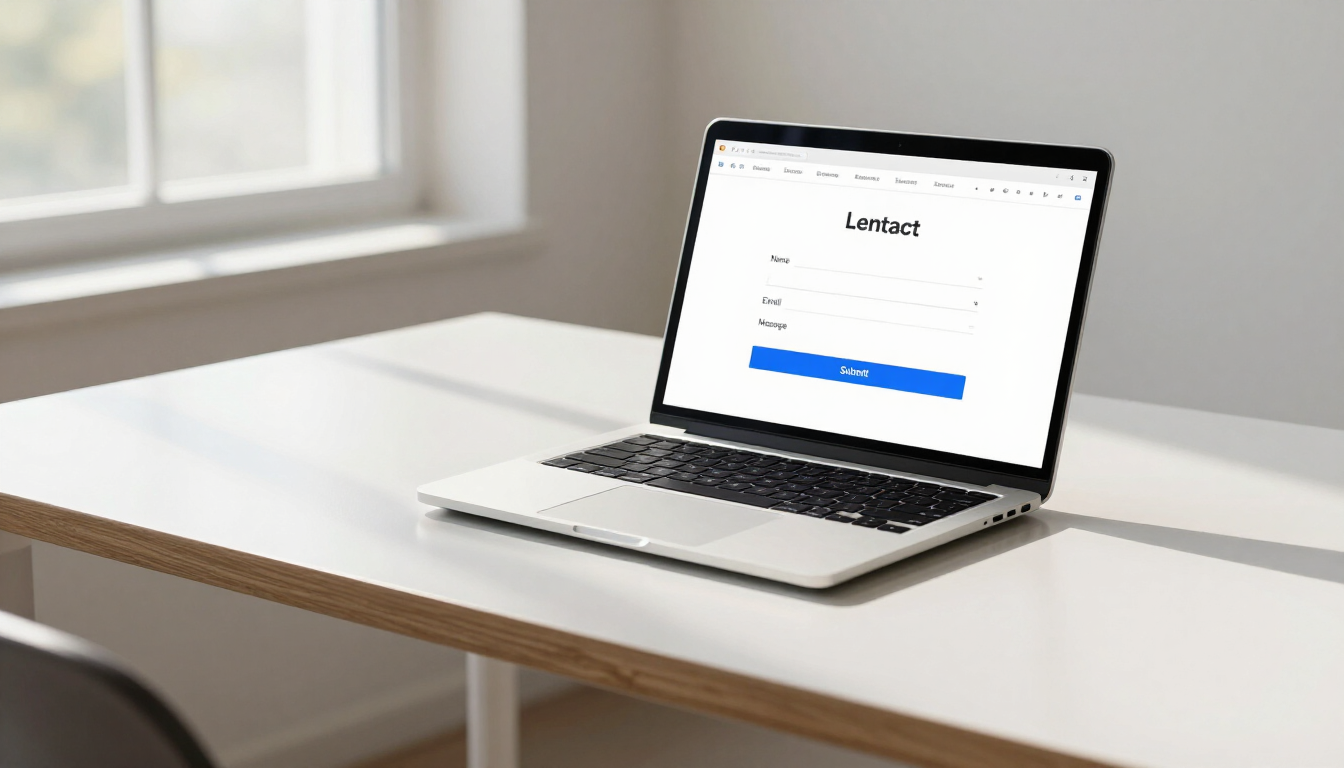
photorealistic modern office desk with a laptop showing a clean professional landing page design with a contact form natural lighting

How do dedicated landing pages lower your Google Ads costs?

Many business owners don't realize that the quality of their landing page directly impacts how much they pay for every single click. Within the Google Ads ecosystem, a metric known as Quality Score plays a massive role in your ad's performance. Quality Score is Google's rating of the quality and relevance of both your keywords and PPC ads. A major component of this score is the "Landing Page Experience."

When you use a dedicated landing page that is highly relevant to your keywords, Google rewards you with a higher Quality Score. A higher score leads to lower costs per click (CPC) and better ad positions. Essentially, Google wants to provide a good experience for its users; if your page helps a user find what they need quickly, Google makes it cheaper for you to advertise. Conversely, sending users to a slow-loading, irrelevant, or confusing homepage will tank your Quality Score, forcing you to bid significantly more just to maintain visibility.

By investing in professional website design that prioritizes the post-click experience, you are essentially buying a discount on your future advertising. At adPRO, we’ve seen clients significantly reduce their monthly spend while increasing their lead volume simply by fixing the destination of their traffic. It is a data-driven strategy that outperforms guesswork every time.

Maximizing Conversion Rates with Targeted Design

Conversion Rate Optimization (CRO) is the practice of increasing the percentage of users who perform a desired action on a website. In the context of PPC, your landing page is your primary CRO tool. While search engine optimization helps bring organic traffic over time, PPC provides immediate traffic that needs to be captured instantly. A targeted design speaks directly to the user's psychology at the moment of the click.

A high-converting design utilizes visual hierarchy to guide the user's eye toward the Call to Action (CTA). This might involve using contrasting colors for buttons, incorporating directional cues, or placing the most important information "above the fold" so users don't have to scroll to understand the offer. When a landing page is built with a singular focus, every element on that page—from the hero image to the testimonials—serves to reinforce the decision to convert.

What makes a high-converting PPC landing page?

Creating a landing page isn't just about aesthetics; it's about architecture and strategy. To truly understand the landing page importance for PPC, you must look at the specific elements that drive results. A page that looks pretty but fails to convert is a liability. For businesses in Southern Maryland looking to compete with larger national brands, the details of the landing page are where the battle is won.

Essential elements of a high-converting page include:

  • A Compelling Headline: It must be the first thing a user sees and must echo the ad’s promise.
  • Clear Call to Action (CTA): Whether it's "Get a Free Quote" or "Download the Guide," the button must be prominent and persuasive.
  • Social Proof: Including reviews, testimonials, or local trust badges (like "Serving Calvert County since 1999") builds immediate credibility.
  • Mobile Optimization: With the majority of PPC clicks coming from mobile devices, your page must load instantly and look perfect on smartphones.
  • Benefit-Oriented Copy: Instead of listing features, explain how your service solves the customer's specific pain point.
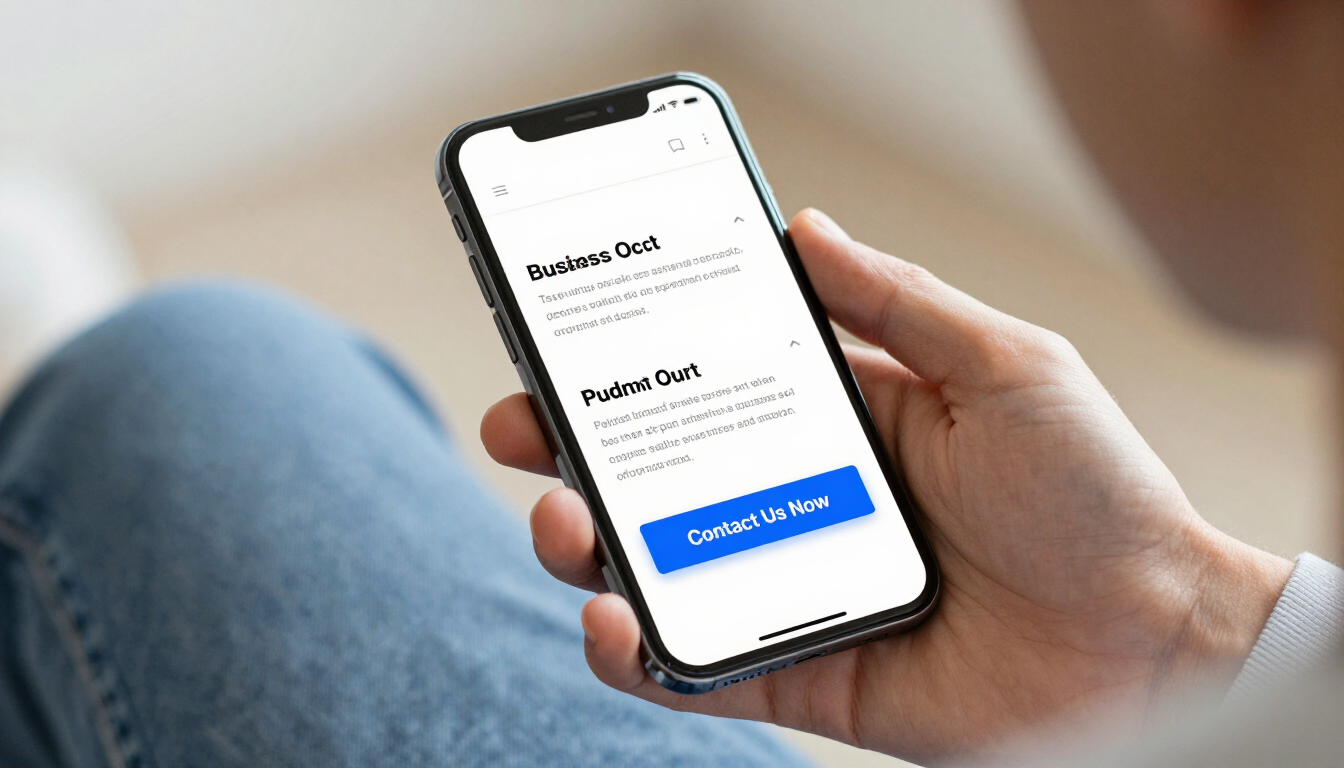
photorealistic smartphone held by a person showing a mobile optimized landing page for a local service business with a large call to action button

The Impact of Landing Page Relevance on Quality Score

Relevance is the currency of the modern web. As we move further into the era of AEO and GEO optimization , search engines and AI answer engines are becoming more sophisticated at judging whether a page actually satisfies a user query. In PPC, relevance isn't just a suggestion—it's a requirement for profitability. Google analyzes the relationship between the keyword, the ad copy, and the landing page.

If there is a disconnect—for example, an ad for "solar panel installation" leading to a page about general "home renovations"—the relevance score drops. This misalignment signals to the platform that the user might be frustrated, leading to a lower ad rank. By ensuring your landing page is hyper-focused on the specific keyword group you are bidding on, you ensure that every part of the funnel is working in harmony. This holistic approach is why adPRO emphasizes research and strategy before a single line of code is written for a client's site.

Can I just send PPC traffic to my homepage?

Technically, you can, but you shouldn't. Homepages are designed to be a directory for your entire business. They often feature multiple links, various service descriptions, blog posts, and "About Us" sections. For an organic visitor, this is great. For a PPC visitor who just clicked an ad for a specific "$99 AC Tune-Up," it’s a nightmare. The homepage acts like a "leaky bucket" where potential customers fall through the holes of unnecessary navigation.

When a user lands on a homepage, they are forced to make choices. Every choice you give a visitor is an opportunity for them to leave. A dedicated landing page, however, presents only two choices: convert or close the tab. By narrowing the options, you significantly increase the likelihood of the former. This is especially true for web design Southern Maryland projects, where local service providers need to capture leads quickly before the user moves on to a competitor.

Strategic Alignment Between Ad Copy and Design

Winning at PPC requires a seamless transition from the search result to the final thank-you page. This strategic alignment, often called "Message Match," is what separates professional campaigns from amateur ones. If your ad mentions a 20% discount, that 20% discount should be the most prominent text on your landing page. If the ad features a specific image of a product, that same product should be visible upon arrival.

This consistency reduces the cognitive load on the user. They don't have to wonder if they clicked the right link; they know they are in the right place. This builds the necessary trust required for a user to hand over their contact information or credit card details. At adPRO, we believe that great marketing starts with understanding the end goal first. By aligning your ad strategy with a high-performance landing page, you create a data-driven path to success that outperforms any guess-based marketing plan.

photorealistic high-tech digital marketing dashboard with rising green charts and graphs symbolizing growth and success

Transcript:

If you're running ads or posting on social media and sending people to your homepage — you're leaving money on the table. Let me explain why.


A landing page is a standalone web page built for one purpose — to get a visitor to take one specific action. That might be calling your business, filling out a form, or claiming an offer. Unlike your homepage, which tries to do everything, a landing page does one thing — and does it well.


Here's the problem with sending ad traffic to your homepage. Your visitor lands there and sees your menu, your services, your about page, your blog — and they get distracted. They click around, get confused, and leave. A landing page removes all of that noise. It matches exactly what your ad promised, keeps the visitor focused, and makes it dead simple to take the next step.


Let's say you're a local HVAC company running a Google Ad for "AC repair near me." If that ad sends people to your homepage — you might get a 2 or 3 percent conversion rate. But if it sends them to a dedicated landing page that says "Fast AC Repair in [Your City] — Call Now for Same-Day Service" — that rate can jump to 10, 15, even 20 percent. Same ad budget. Way more leads.


So if you're running any kind of paid advertising — Google Ads, Facebook, anything — make sure you have a dedicated landing page for every campaign. If you need help building one that actually converts, visit adproincorporated.com — or drop your question in the comments below. I'm here to help.


Summary: Your Next Steps for PPC Success

Using a dedicated landing page is the single most effective way to improve the performance of your Pay Per Click campaigns. By focusing on relevance, removing distractions, and aligning your page with your ad’s specific intent, you create a conversion machine that maximizes every dollar of your ad spend. Remember that a landing page is not a luxury; it is a fundamental component of a profitable digital strategy.

Core Takeaways:

  • Boost ROI: Targeted landing pages convert at a significantly higher rate than homepages.
  • Lower Costs: High-quality landing pages improve Quality Scores, reducing your CPC.
  • Enhance UX: Users find what they need faster, leading to higher satisfaction and brand trust.
  • Focus on One Goal: A single, clear Call to Action is the key to driving results.
  • Test and Optimize: Use landing pages to gather data and continually refine your marketing approach.

It's Your Business, Let's Build it!

Recent Posts

Specialized team analyzing website ROI data on screens.
June 23, 2026
Evaluate the ROI impact of hiring specialized revenue-focused web design experts. Learn how strategic design drives leads and measurable business growth.

Professional local SEO experts working on business rankings
June 23, 2026
Discover how local search ranking experts can transform your small business visibility. Learn about Google Maps, AEO, and local SEO strategies for 2026.

A digital marketing dashboard showing banner ad statistics and conversion metrics.
June 14, 2026
Learn how long a banner ad needs to run to generate clicks and sales. Discover factors influencing performance and timing for digital advertising success in 2026.
Color palette swatches on a modern designer desk representing website color psychology
June 14, 2026
Master website color psychology to influence user behavior. This 2026 guide helps business owners choose colors that build trust and drive conversions.
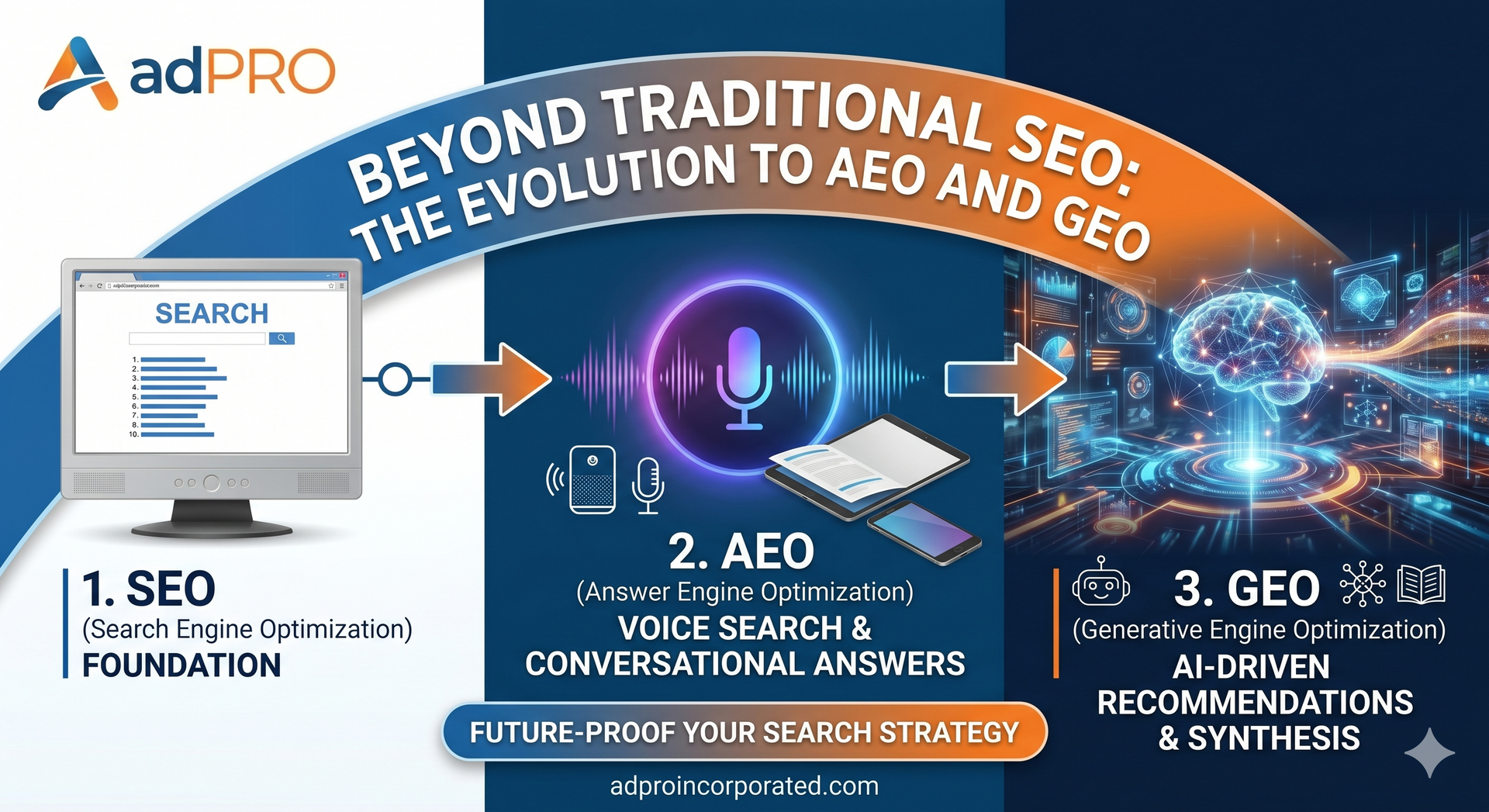
By Deborah Naugle June 12, 2026
Why Your Business Needs All Three: SEO, AEO, & GEO
A laptop showing SEO analytics and search engine results on a desk.
May 30, 2026
Can SEO help if you don't have a Google My Business profile? Learn how organic SEO drives traffic, & wins customers without a local map listing.

Organic growth seedling on a keyboard representing SEO progress.
May 30, 2026
Discover why search engine optimization requires 4-12 months to deliver results. Learn about authority, competition, and technical factors in this 2026 guide.
Web design wireframes on a computer screen
May 30, 2026
Unlock the 7Cs of web design to improve your site's UX, SEO, and conversion rates. Our guide covers Context, Content, Community, and more for 2026.

Digital representation of Generative Engine Optimization concepts with glowing connections.
May 30, 2026
Discover what GEO in SEO is and how Generative Engine Optimization helps your business rank in AI-driven search results. Learn strategies for 2026.

Answer Engine Optimization visualization on a computer screen
May 30, 2026
Learn what Answer Engine Optimization (AEO) is and how to optimize your business website for AI search engines like ChatGPT and Google Gemini.
Show More