


May 30, 2026

What is Answer Engine Optimization? (AEO Guide 2026)

Share this article

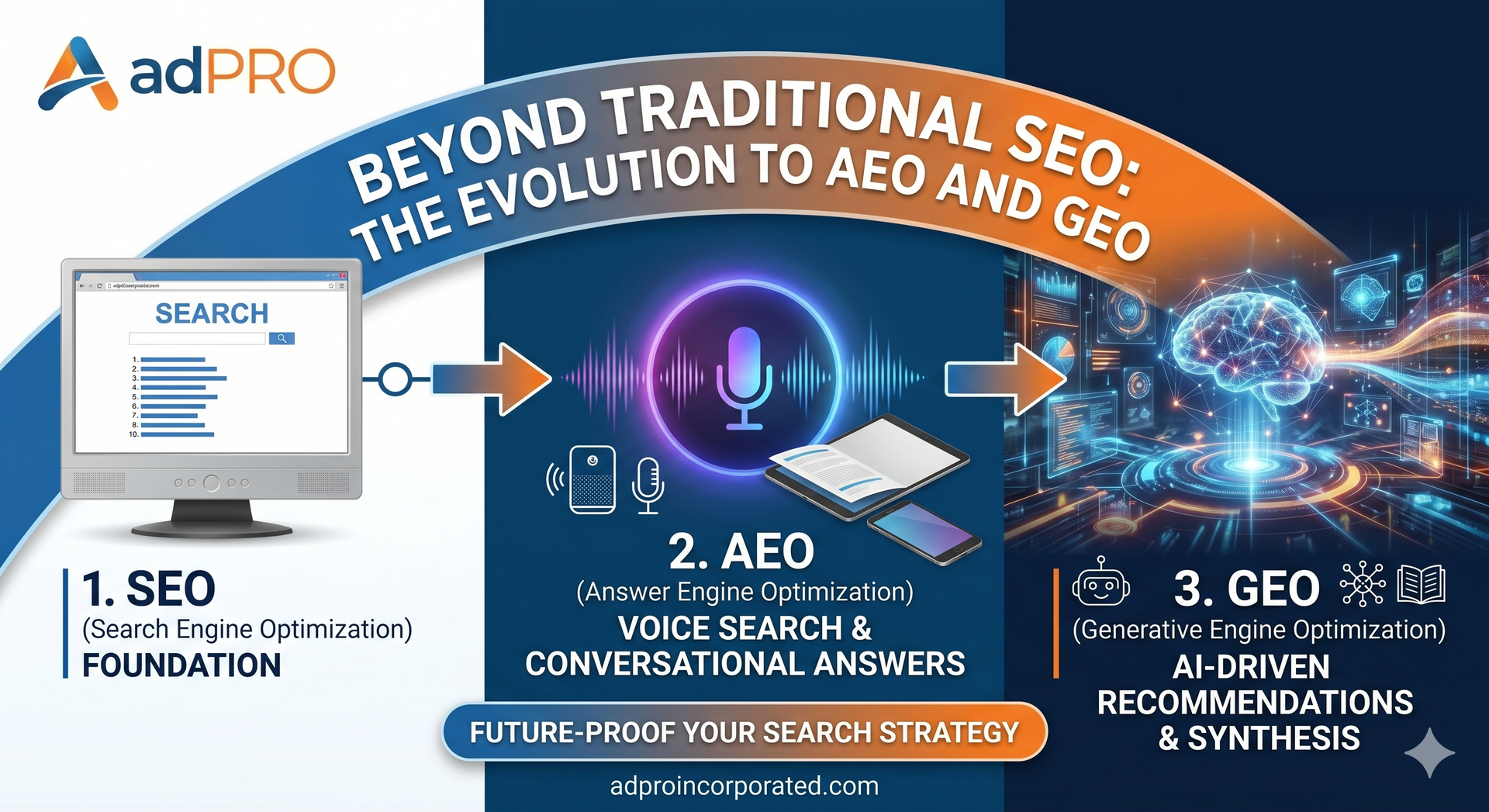
Answer Engine Optimization (AEO) is the process of optimizing web content to be cited by AI-powered "answer engines" like Perplexity, ChatGPT, and Google Gemini. Unlike traditional SEO, AEO focuses on providing concise, authoritative, and direct answers to user queries to secure placement in AI-generated responses and featured snippets.

The digital landscape is shifting rapidly. For decades, we relied on Search Engine Optimization to rank on the first page of Google, hoping users would click our links. However, the rise of Large Language Models (LLMs) and Generative AI has birthed a new era: the era of the answer. Users no longer want a list of links; they want a specific solution delivered instantly. This is where Answer Engine Optimization (AEO) becomes the most critical component of your digital strategy. While traditional SEO is about visibility in a list, AEO is about being the chosen response in a conversation.

At adPRO, we have seen this transition firsthand. Since 1999, we have helped businesses in Southern Maryland and beyond navigate every major algorithm shift. The move toward AEO is perhaps the most significant since the invention of the search engine itself. It requires a fundamental change in how we structure information. We aren't just writing for people anymore; we are writing for machines that summarize information for people. To win in this environment, your brand must be recognized as the definitive source of truth for your specific niche.

AI Interface on Laptop

How does AEO differ from traditional SEO?

Traditional SEO and Answer Engine Optimization (AEO) are two sides of the same coin, but they target different user behaviors. SEO is designed for discovery. It uses keywords, backlinks, and site structure to tell a search engine that a page is relevant to a broad topic. The goal is to drive traffic to a website where the user can then explore further. AEO, conversely, is highly transactional and informational. It targets "zero-click" searches where the user receives their answer directly on the search results page or within an AI chat interface.

While SEO focuses on ranking for high-volume keywords, AEO focuses on answering specific, long-tail questions. In a traditional search, a user might type "best plumber in Maryland." In an AI-driven search, that same user might ask, "Who is the most reliable emergency plumber near Calvert County with 24-hour service?" AEO ensures that your business is the one the AI recommends because your site provided the specific data points—location, hours, and service types—in a format the AI could easily digest. You can learn more about how we integrate these concepts on our AEO and GEO Optimization page.

Why is AEO important for your business in 2026?

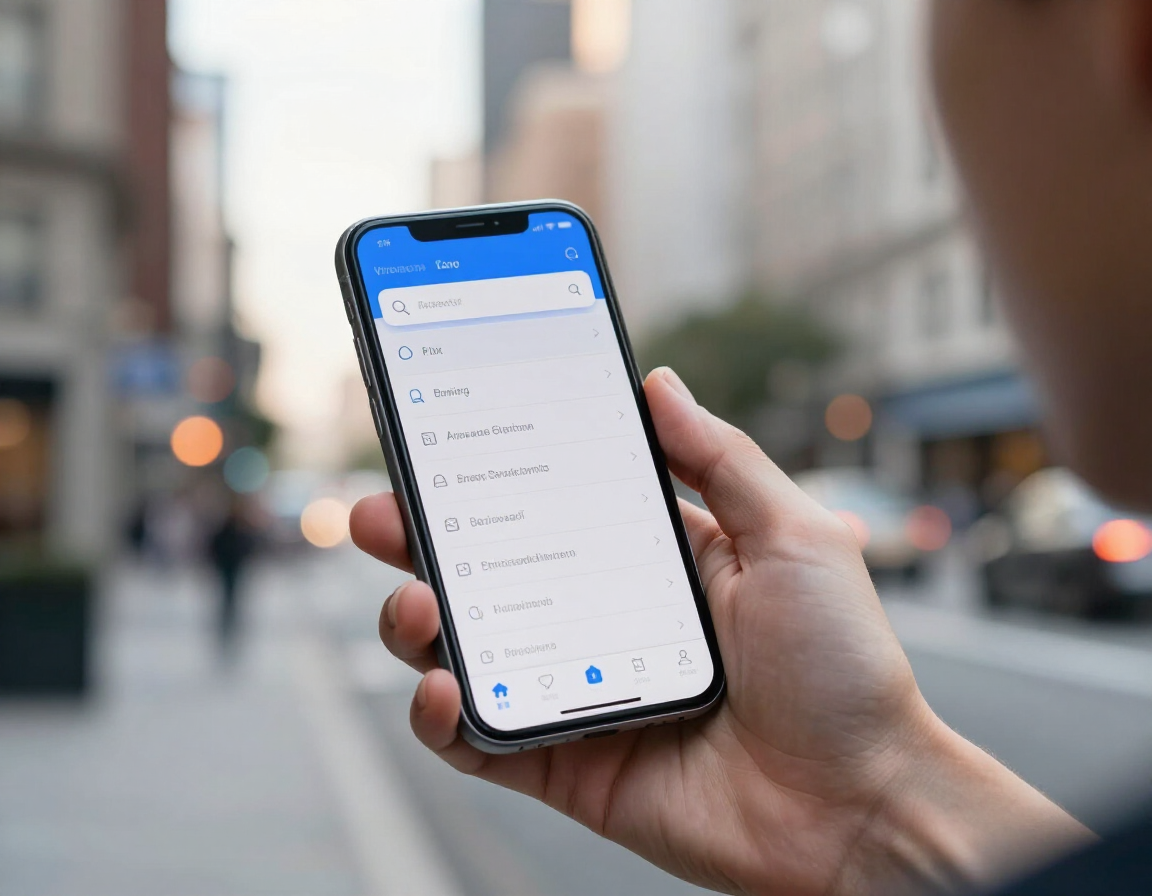
By 2026, the majority of search queries are expected to be processed through some form of generative AI. If your content isn't optimized for these engines, you risk becoming invisible to a massive segment of your target audience. AEO isn't just a trend; it's a necessity for survival in a world where voice search and AI assistants are the primary interfaces for consumers.

Consider the convenience factor. A business owner looking for website design services doesn't want to spend twenty minutes clicking through five different portfolios. They want to ask their AI assistant, "Which local agency has the highest client retention rate for service businesses?" If your website contains clear, structured data and testimonials that answer this question directly, you become the top recommendation. AEO builds trust by providing immediate value, positioning your brand as an expert before the customer even visits your site.

Person using voice search on smartphone

The Role of Structured Data

Structured data, or Schema markup, is the backbone of Answer Engine Optimization. Think of it as a translator that speaks the language of AI. While humans see a beautiful website layout, AI engines see the underlying code. By using specific Schema types—such as FAQ, Product, LocalBusiness, or Article—you provide a map that tells the AI exactly what each piece of information represents. This clarity makes it significantly more likely that an engine like Google Gemini will pull your content into a featured snippet or AI overview.

How to optimize your content for AI search engines?

Optimizing for AEO requires a shift toward natural language and specific formatting. AI engines prioritize content that is easy to parse and high in authority. To ensure your business stays ahead, follow these essential steps for digital marketing and advertising in the AI era:

  • Use a question-and-answer format in your H2 and H3 headings to match natural language queries.
  • Provide a concise summary (40-50 words) at the beginning of each major section to serve as a direct answer.
  • Implement comprehensive Schema markup to define your business location, services, and pricing.
  • Maintain a high level of E-E-A-T (Experience, Expertise, Authoritativeness, and Trustworthiness) through verified reviews and case studies.
  • Keep your content updated frequently, as AI models favor fresh data when providing real-time recommendations.

What are the key elements of a successful AEO strategy?

A successful AEO strategy is built on clarity and context. You cannot simply stuff keywords into a page and expect an AI to recommend you. Instead, you must build a knowledge graph around your brand. This means linking your content internally to show relationships between topics and ensuring your external presence—such as your Google Business Profile and social media—is consistent.

AI engines look for consensus. If your website says you offer one service, but your reviews and social profiles say something else, the AI will perceive a lack of authority and look elsewhere. Consistency across all digital touchpoints is the hidden engine behind high AEO rankings. We focus heavily on this at adPRO, ensuring that every piece of data regarding your business is synchronized and accurate, which is a core part of our Our Web Design Process .

Authority and E-E-A-T in the AI Era

Authority is the currency of the AI search world. Because generative AI has the potential to hallucinate or provide incorrect information, these engines are programmed to favor sources with high trust scores. E-E-A-T is no longer just a guideline for Google; it is a filter for all major answer engines. To rank, you need to prove that you are a real entity with real expertise. This is achieved through detailed author bios, links to reputable third-party mentions, and a robust Reviews section that proves your value in the real world.

Digital network nodes connecting

Future-Proofing Your Digital Presence

As we look toward the future of the web, the distinction between search and conversation will continue to blur. Your website must evolve from a static brochure into a dynamic knowledge base. This doesn't mean you should abandon traditional SEO; rather, you should expand your efforts to include AEO as a primary pillar of your growth strategy. By focusing on how users ask questions and how AI engines synthesize answers, you can secure a competitive advantage that lasts for years.

Summary of Answer Engine Optimization Benefits

Answer Engine Optimization (AEO) is the future of digital discovery, moving beyond traditional keyword ranking to focus on direct query fulfillment. By structuring your content for AI engines, you ensure your business remains the top choice for users seeking instant solutions. Implementing AEO involves using natural language, structured data, and high-authority content to feed the algorithms that power today’s search assistants. To stay competitive, businesses must adapt their strategies to be more conversational and data-driven.

Key Takeaways:

  • AEO focuses on direct answers for AI engines like ChatGPT and Google Gemini.
  • Structured data (Schema) is essential for helping AI understand your content.
  • Natural language questions in headings improve visibility in voice and AI search.
  • Consistency across all digital platforms builds the authority AI engines require.
  • AEO complements traditional SEO by capturing "zero-click" and conversational traffic.

If you are ready to prepare your business for the future of search, Contact the team at adPRO today to discuss a custom AEO strategy.

It's Your Business, Let's Build it!

Recent Posts

A laptop showing SEO analytics and search engine results on a desk.
May 30, 2026
Can SEO help if you don't have a Google My Business profile? Learn how organic SEO drives traffic, & wins customers without a local map listing.

Organic growth seedling on a keyboard representing SEO progress.
May 30, 2026
Discover why search engine optimization requires 4-12 months to deliver results. Learn about authority, competition, and technical factors in this 2026 guide.

Web design wireframes on a computer screen
May 30, 2026
Unlock the 7Cs of web design to improve your site's UX, SEO, and conversion rates. Our guide covers Context, Content, Community, and more for 2026.

Digital representation of Generative Engine Optimization concepts with glowing connections.
May 30, 2026
Discover what GEO in SEO is and how Generative Engine Optimization helps your business rank in AI-driven search results. Learn strategies for 2026.
Business comparison between DIY and professional agency marketing
May 30, 2026
Compare DIY marketing vs. hiring an agency. Learn which path delivers better ROI for small businesses based on cost, expertise, and long-term scalability.
Smartphone displaying five star online reviews
May 30, 2026
Online reviews have replaced traditional word-of-mouth as the primary trust signal for SMBs. Learn how to leverage them for SEO, AEO, and sales in 2026.
Southern Maryland digital marketing strategy and local business growth illustration
May 30, 2026
Hiring a Southern Maryland marketing agency offers local expertise & community ties that drive growth. Why adPRO is the top choice for regional businesses.
Unread social media notification bubbles on a smartphone screen representing the risk of ignoring social media comments.
May 30, 2026
Discover why ignoring social media comments is hurting your small business and learn how active engagement can improve SEO and customer loyalty.
Digital marketing workspace showing website metadata optimization strategy.
May 30, 2026
Learn what a meta description is, its impact on SEO and CTR, and how to write high-converting snippets for your small business website in 2026.
Business dashboard showing search engine ranking improvements
May 30, 2026
Discover why your competitor ranks higher on Google and learn actionable SEO and AEO strategies to reclaim your position and attract more local customers.
Show More