


May 30, 2026

Why Does SEO Take a While? (6 Ways to Rank in 2026)

Share this article

SEO takes time because search engines must crawl, index, and evaluate your content against millions of other pages. Generally, it takes 4 to 12 months to see significant results as Google builds trust in your site’s authority, relevance, and technical performance through consistent optimization and strategic data-driven efforts.

Why does SEO take a while to show results?

One of the most common questions we hear at adPRO is why digital growth doesn't happen overnight. To understand the timeline, you have to understand that Google is essentially a massive library with a highly skeptical librarian. When you launch a new Search Engine Optimization campaign, you are essentially introducing yourself to this librarian. They don’t know you, they don’t know if your information is accurate, and they certainly don’t want to recommend you to their patrons until they are certain of your value.

Several factors contribute to this waiting period:

  • Search Engine Crawling cycles: Google’s bots don’t live on your site; they visit periodically.
  • Indexing Lag: Just because a page is crawled doesn't mean it's immediately added to the index.
  • Algorithm Verification: Google tests your site’s performance and user engagement over time.
  • Historical Data: Older domains with consistent histories often rank faster than brand-new ones.
  • Backlink Accrual: Earning high-quality links naturally takes months of outreach and content distribution.

At adPRO, we’ve been helping Southern Maryland businesses navigate these timelines since 1999. We know that the research phase is the most critical part of the process. If you start with guesswork, you’ll wait even longer for results. By utilizing a data-backed strategy, we ensure that when the results do start coming in, they are sustainable and aligned with your actual business goals.

The Role of Website Authority and Trust

In the world of Digital Marketing and Advertising , authority is currency. Google uses a framework known as E-E-A-T (Experience, Expertise, Authoritativeness, and Trustworthiness) to determine which sites deserve the top spots. Building this authority is not a toggle switch; it is a slow build.

Think of your website like a brand-new restaurant in Calvert County. Even if you have the best food in town, it takes months for word-of-mouth to spread and for people to trust your quality. SEO works the same way. Google looks for "signals" from other reputable sites (backlinks) and consistent user satisfaction to verify that you are a trusted source. If your site has a history of technical issues or thin content, you may even be starting from a "trust deficit," which takes even longer to correct.

SEO Analysis

How does competition affect my ranking speed?

If you are a local plumber in a small town, you might see results in 3 to 4 months. However, if you are a national e-commerce brand competing for keywords like "best running shoes," you are entering a battlefield where your competitors have been spending millions for decades. The more competitive your industry, the longer it takes to "out-author" the incumbents.

When we perform research for our clients, we look at:

  1. Competitor Backlink Profiles: How many sites are already vouching for your rivals?
  2. Keyword Difficulty: How much content already exists for your target search terms?
  3. Competitor Longevity: How long have the top-ranking sites held those positions?
  4. Local vs. National Intent: Are you fighting for a zip code or a whole country?
  5. Content Depth: Are your competitors writing 500-word blogs or 5,000-word guides?

Our philosophy is that a strategy built on data always outperforms guesswork. If the competition is high, we might pivot to long-tail keywords or Web Design For Service Businesses that focuses on hyper-local niches to get you faster wins while the long-term SEO builds up. This balanced approach ensures you aren't just waiting in silence for a year.

Technical SEO Factors that Delay Progress

Sometimes, the reason SEO is taking a while isn't about your content at all—it’s about your "pipes." Technical SEO refers to the backend structure of your website. If your Website Design is clunky, slow, or difficult for bots to read, Google will deprioritize you. Repairing a site's technical foundation can take weeks of development, and it can take several more weeks for Google to recognize those improvements.

Common technical bottlenecks include:

  • Slow Page Load Speeds: Users won't wait, and neither will Google.
  • Poor Mobile Optimization: With mobile-first indexing, a bad phone experience kills rankings.
  • Broken Redirects and 404s: These act as dead ends for search engine bots.
  • Crawl Budget Waste: Too many low-value pages prevent bots from finding your good content.
  • Missing Schema Markup: Without structured data, Google has to guess what your page is about.
Strategy Meeting

What is the typical SEO timeline for new websites?

For a brand-new domain, the timeline is often longer due to what many call the "Google Sandbox." This is an unofficial period where Google limits the ranking potential of new sites until they prove they aren't spam.

Here is a realistic month-by-month breakdown of what to expect:

  • Months 1-2: Research, technical audits, and foundational content creation.
  • Months 3-4: Initial indexing, minor ranking improvements for obscure terms, and technical fixes.
  • Months 5-6: Visible movement in rankings for more competitive terms and increased organic traffic.
  • Months 7-12: Compounding growth where previous efforts begin to pay off exponentially.

Many businesses give up at month 4, right before the "hockey stick" growth curve begins. At adPRO, we focus on the end goal. One of our clients now sees 85% of their total business coming directly from their website. That didn't happen in thirty days—it happened because they stayed the course and trusted the data-driven plan we implemented.

Content Quality and the Crawling Cycle

Content is the fuel for your SEO engine. However, writing one blog post and expecting a ranking is like going to the gym once and expecting a six-pack. Consistency is what signals to Google that your site is an active, living resource. If you only update your site once a year, Google’s bots will visit less frequently. If you update regularly with high-quality, research-backed information, you increase your "crawl frequency."

High-quality content must be:

  1. Comprehensive: It should answer the user's question completely.
  2. Unique: It shouldn't just regurgitate what's already on page one.
  3. Readable: Proper headings (like the ones you see here) make it easy for humans and bots.
  4. Actionable: It should lead the reader toward a solution or next step.
  5. Optimized: Keywords should be used naturally, not forced.

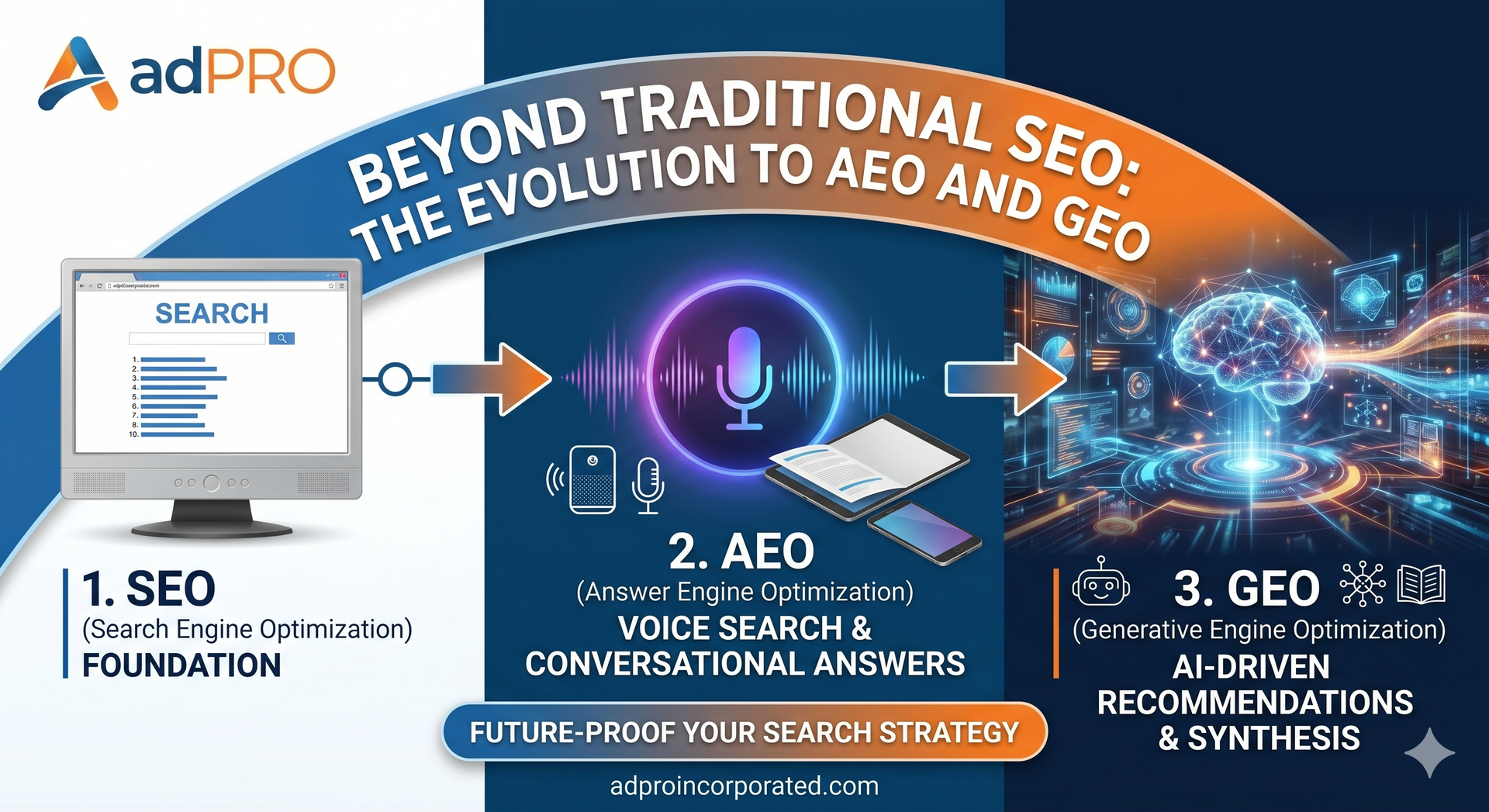
How does AEO impact traditional SEO timelines?

In 2026, SEO is no longer just about blue links on a search page. Answer Engine Optimization (AEO) and Generative Engine Optimization (GEO) are changing the timeline. AI-driven platforms like ChatGPT and Google's Gemini pull information differently than traditional search. While AEO and GEO Optimization require the same foundation of trust, they prioritize clarity and directness.

Integrating AEO into your strategy can sometimes yield faster results in "Featured Snippets" or AI answers, even if you aren't ranking #1 in traditional results yet. This is because AI models look for the most concise, well-structured answer to a specific query. By formatting your site to be easily "extracted" by AI, you can capture high-intent traffic while your broader SEO authority continues to mature over the standard 6-12 month period.

Digital Networks

Summary of Why SEO is a Long-Term Investment

SEO takes a while because it is a process of building a digital reputation that search engines can trust. Unlike paid ads that stop the moment you stop paying, SEO is an asset that grows in value over time. By focusing on research, technical health, and consistent quality, you ensure that your business isn't just a flash in the pan, but a dominant force in your market.

Key Takeaways:

  • Patience is Mandatory: Expect 4-12 months for significant, sustainable growth.
  • Authority is Earned: Google needs time to verify your expertise and trustworthiness.
  • Technical Health Matters: A slow or broken site will always lag behind, regardless of content.
  • Data Beats Guesswork: Start with deep research to avoid wasting months on the wrong keywords.
  • Consistency Wins: Regular updates and AEO formatting help you stay relevant in a changing AI landscape.

If you're ready to stop guessing and start growing, Contact us today to discuss how we can build a data-driven strategy for your business.

It's Your Business, Let's Build it!

Recent Posts

A laptop showing SEO analytics and search engine results on a desk.
May 30, 2026
Can SEO help if you don't have a Google My Business profile? Learn how organic SEO drives traffic, & wins customers without a local map listing.
Web design wireframes on a computer screen
May 30, 2026
Unlock the 7Cs of web design to improve your site's UX, SEO, and conversion rates. Our guide covers Context, Content, Community, and more for 2026.

Digital representation of Generative Engine Optimization concepts with glowing connections.
May 30, 2026
Discover what GEO in SEO is and how Generative Engine Optimization helps your business rank in AI-driven search results. Learn strategies for 2026.

Answer Engine Optimization visualization on a computer screen
May 30, 2026
Learn what Answer Engine Optimization (AEO) is and how to optimize your business website for AI search engines like ChatGPT and Google Gemini.
Business comparison between DIY and professional agency marketing
May 30, 2026
Compare DIY marketing vs. hiring an agency. Learn which path delivers better ROI for small businesses based on cost, expertise, and long-term scalability.
Smartphone displaying five star online reviews
May 30, 2026
Online reviews have replaced traditional word-of-mouth as the primary trust signal for SMBs. Learn how to leverage them for SEO, AEO, and sales in 2026.
Southern Maryland digital marketing strategy and local business growth illustration
May 30, 2026
Hiring a Southern Maryland marketing agency offers local expertise & community ties that drive growth. Why adPRO is the top choice for regional businesses.
Unread social media notification bubbles on a smartphone screen representing the risk of ignoring social media comments.
May 30, 2026
Discover why ignoring social media comments is hurting your small business and learn how active engagement can improve SEO and customer loyalty.
Digital marketing workspace showing website metadata optimization strategy.
May 30, 2026
Learn what a meta description is, its impact on SEO and CTR, and how to write high-converting snippets for your small business website in 2026.
Business dashboard showing search engine ranking improvements
May 30, 2026
Discover why your competitor ranks higher on Google and learn actionable SEO and AEO strategies to reclaim your position and attract more local customers.
Show More