
Why You Need a Website Rebuild Every 3-5 Years (2026)
Most businesses need a website rebuild every 3–5 years because digital technology, security protocols, and search engine algorithms evolve rapidly. A stale site loses visibility on Google, suffers from slow loading speeds, and lacks the mobile-optimized experience required to convert modern visitors into loyal customers and leads.
Why should I rebuild my website every three to five years?
In the fast-paced world of digital marketing, staying relevant is a matter of survival. Since 1999, adPRO has watched the internet transform from a luxury for large corporations into the primary battlefield for small businesses in Southern Maryland. When your website sits static for more than three years, it begins to accumulate "technical debt." This refers to the compounding cost of outdated code, sluggish plugins, and design trends that no longer resonate with savvy consumers.
From our headquarters in Calvert County, we have seen local businesses lose significant market share simply because their competitors launched a faster, cleaner, and more helpful site. The 3-5 year window isn't an arbitrary number; it is the typical lifecycle of a web framework and the average interval for major shifts in Google’s ranking factors. If you want to keep competing effectively, you must treat your digital presence as a living asset rather than a finished project.
How technology debt impacts Southern Maryland businesses
Technology debt is a silent killer for small to medium-sized enterprises. When your site is built on older foundations, it becomes increasingly difficult—and expensive—to patch and maintain. Eventually, the cost of fixing an old site exceeds the investment required for a Website Design overhaul.
Consider these five technical areas that degrade over time:
- Page Speed Degradation: Older code and unoptimized scripts slow down your site.
- Security Vulnerabilities: As hackers find new ways to exploit old platforms, your risk of a breach increases.
- Browser Incompatibility: Modern browsers like Chrome and Safari stop supporting older web standards.
- CMS Obsolescence: Content Management Systems (CMS) eventually stop providing security updates for older versions.
- Feature Limitations: New tools like AI chatbots or advanced CRM integrations often require modern architectures.
At adPRO, our philosophy is rooted in research. We know that a strategy built on data outperforms guesswork every time. When we analyze older sites, the data almost always shows a steady decline in user engagement as the site ages past the four-year mark. This is why we focus on Our Web Design Process to ensure every rebuild is future-proofed as much as possible.
Is your website optimized for modern AI search engines?
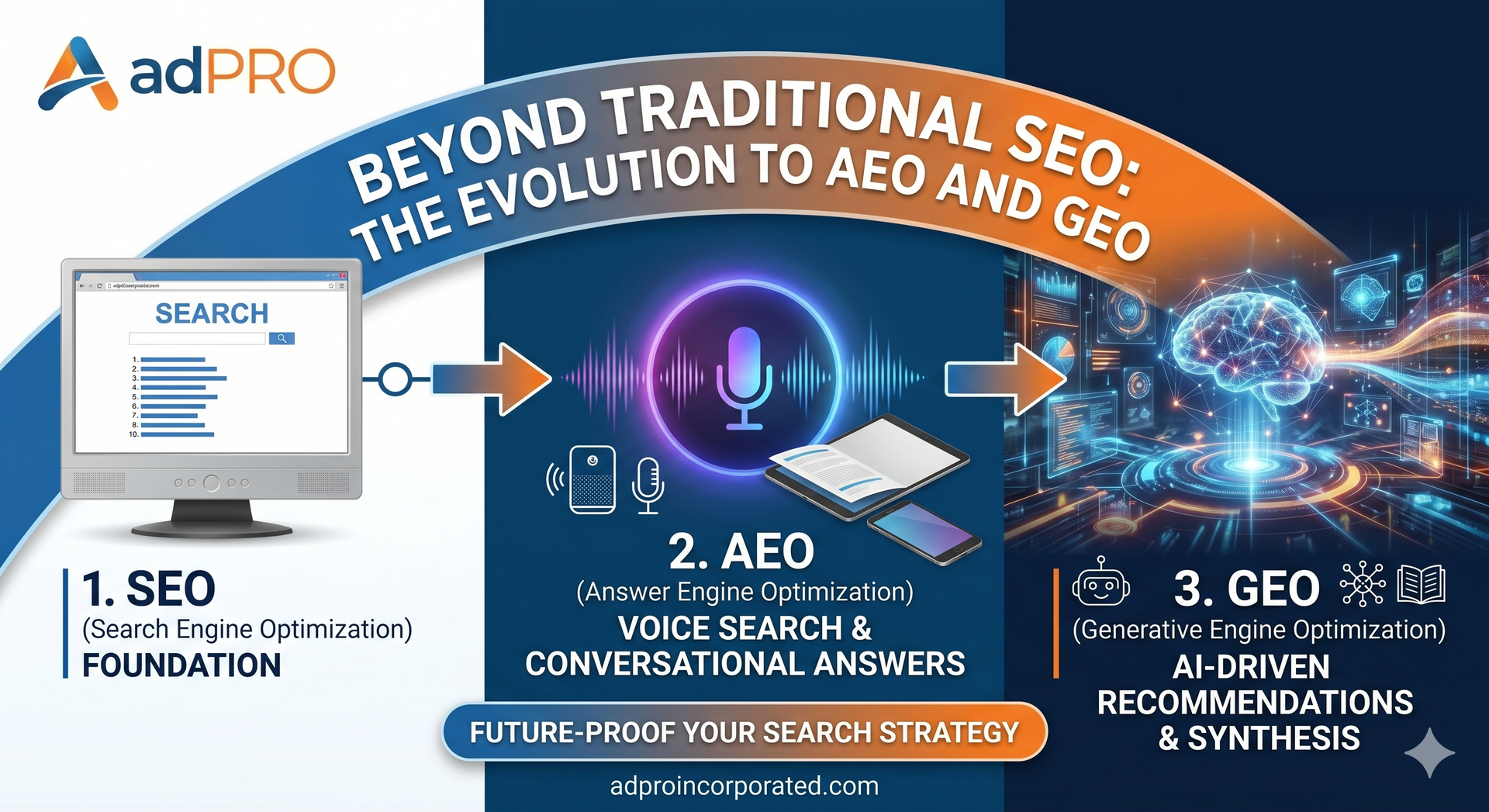
SEO is no longer just about keywords; it’s about answering questions. As we move into 2026, the rise of Answer Engine Optimization (AEO) has changed the game. AI-powered search engines like Google’s Gemini or ChatGPT Search look for structured, clear, and authoritative content that they can extract easily. If your site was built five years ago, it likely lacks the schema markup and semantic structure needed for high-performance AEO.
Modern Search Engine Optimization requires a technical foundation that allows search engines to "crawl" your site with minimal effort. This includes high-performance hosting, efficient CSS, and properly structured HTML5. Without these elements, your business might as well be invisible to the latest AI search models. Transitioning to AEO and GEO Optimization is often a core component of our rebuild strategies, ensuring your business shows up in AI-generated answers and voice searches.
The Impact of Core Web Vitals
Google now uses a set of specific metrics called Core Web Vitals to judge the health of your site. These metrics measure how fast a page loads, how quickly it becomes interactive, and how stable the layout is as it loads. Older websites almost universally fail these tests because they weren't designed with these specific standards in mind.
A rebuild allows you to:
- Optimize Largest Contentful Paint (LCP) for faster visual loading.
- Minimize First Input Delay (FID) for better interactivity.
- Stabilize Cumulative Layout Shift (CLS) to prevent annoying page jumps.
- Enhance mobile usability across all screen sizes.
- Implement next-gen image formats like WebP or AVIF.
Is your current design hurting your sales?
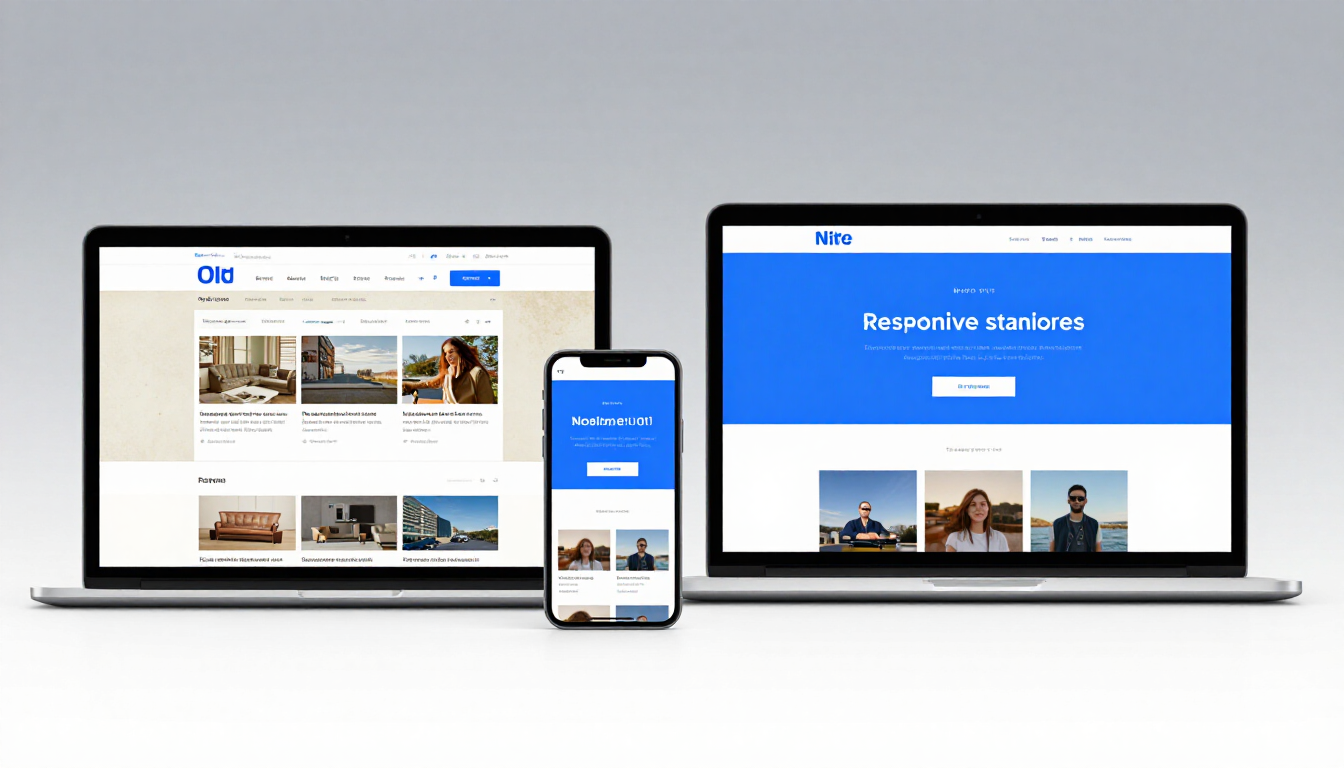
Design is more than just aesthetics; it is a psychological driver of trust. In Southern Maryland, where community and reputation are everything, a dated website can make your business look like it is struggling or out of touch. Research shows that users form an opinion about your brand’s credibility within 0.05 seconds of landing on your page. If your site looks like it belongs in 2018, you are likely losing sales before the customer even reads your first paragraph.
Modern users expect a "frictionless" experience. This means intuitive navigation, clear calls to action (CTAs), and a design that feels fresh and professional. When we rebuild a site, we focus on the end goal before anything else gets built. This approach is why 85% of one of our client's total business now comes directly from the website we built for them. If your current site isn't generating leads, the design itself might be the bottleneck.
Critical Signs Your Site Is Outdated
How do you know for sure if it is time for a change? Sometimes the signs are subtle, and other times they are glaringly obvious. If you haven't touched your website's core structure in over three years, you should perform a quick audit of the following red flags.
Check for these five warning signs:
- High Bounce Rates: Visitors leave almost immediately after arriving.
- Low Mobile Conversion: You get traffic from phones, but no calls or forms.
- Broken Elements: Links don't work, images are missing, or forms fail to send.
- Dated Branding: Your logo or color scheme doesn't match your current marketing materials.
- Slow Load Times: The page takes more than three seconds to load on a 4G connection.
If you recognize these symptoms, it’s time to talk about a Website Design update. Ignoring these issues doesn't just result in lost sales; it actively damages your brand’s SEO standing, making it harder and more expensive to recover your rankings later.
Strategic Steps for Your Next Website Rebuild
Rebuilding a website is a strategic investment, not just a line-item expense. At adPRO, we believe in a research-first approach. We don't just pick a pretty template; we analyze your competition, understand your specific customers in Maryland, and build a site that solves your unique business problems.
To ensure your rebuild is successful, follow these steps:
- Define Your Goals: Are you looking for more leads, direct sales, or brand awareness?
- Audit Content: Decide what stays, what goes, and what needs to be rewritten for AEO.
- Prioritize Mobile: Ensure the mobile experience is the primary focus, not an afterthought.
- Integrate Analytics: Set up tracking to measure the ROI of your new investment.
- Plan for SEO: Ensure your old URLs redirect to new ones so you don't lose existing rankings.
By following a structured process, you turn your website from a digital brochure into a powerful lead-generation engine. We have been helping local businesses do exactly this since 1999, combining decades of experience with the latest digital trends.
Why local Maryland businesses trust adPRO
Our core belief at adPRO hasn't changed in over 25 years: great marketing starts with understanding. Whether you are in Calvert County or serving clients across the United States, your website needs to be a reflection of your commitment to quality. A rebuild every 3–5 years ensures that your digital "front door" is always open, welcoming, and technologically superior to your competition.
We pride ourselves on building long-term relationships. Our clients stay with us for years because we don't just build a site and disappear; we act as partners in their growth. We use data-driven strategies to ensure that every pixel we place and every word we write serves a specific purpose: growing your business.
Summary of Key Takeaways
A website rebuild is a necessary phase of business growth in the modern digital landscape. By refreshing your site every 3–5 years, you ensure that you remain visible, secure, and competitive.
- Stay Visible: Regular updates keep you in favor with Google’s evolving algorithms.
- Boost Speed: Newer technologies ensure your site loads fast enough to keep users engaged.
- Enhance Security: Protect your business and your customers from modern cyber threats.
- Improve Conversion: A fresh, user-centric design turns more visitors into paying clients.
- Optimize for AI: Modernize your structure to take advantage of AEO and voice search trends.
Ready to see how a modern website can transform your business? Contact the experts at adPRO today to start your research-driven rebuild. We’ve been helping businesses win since 1999, and we’re ready to help you too.
It's Your Business, Let's Build it!
We will get back to you as soon as possible.
Please try again later.