
3 SEO Numbers to Grow Your Business
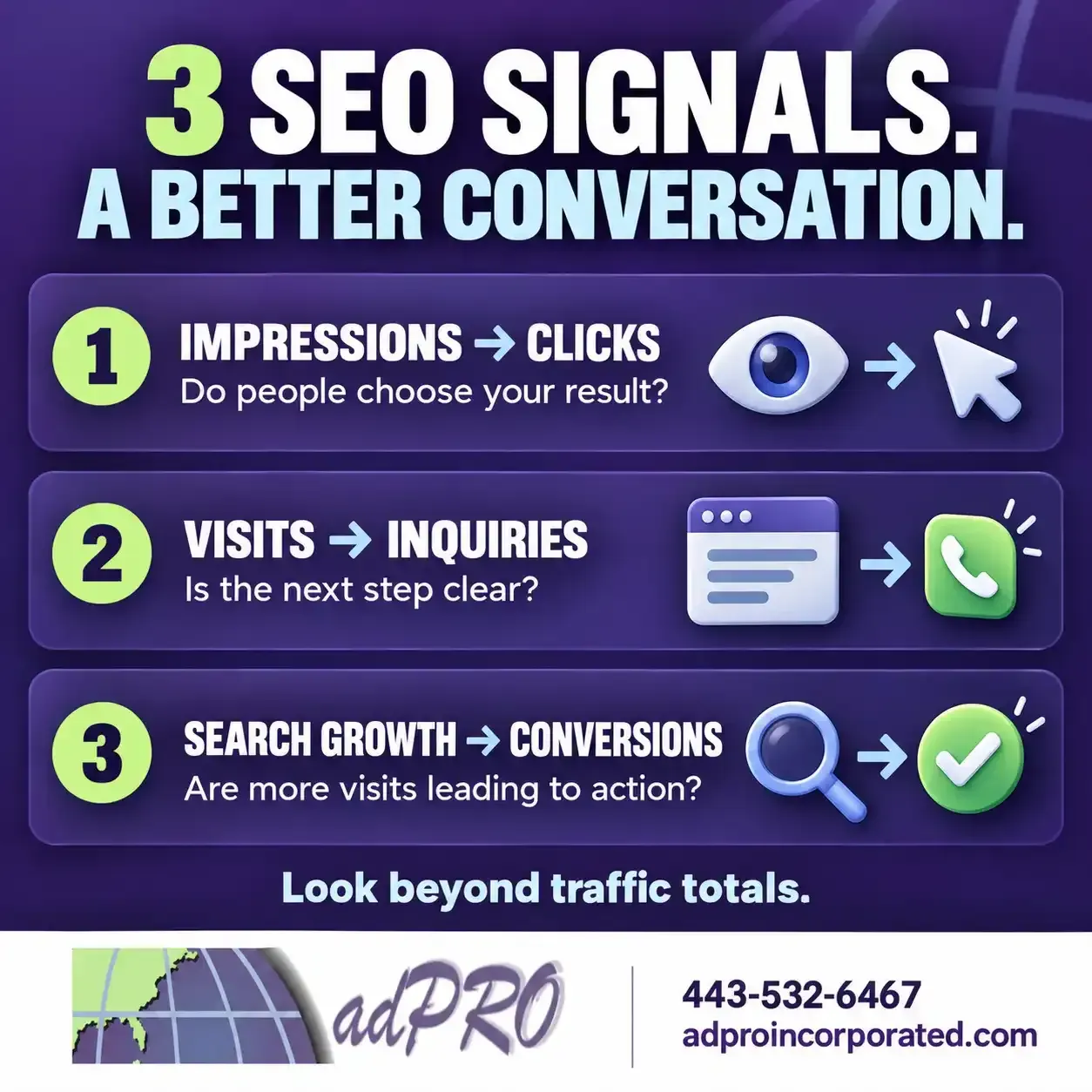
SEO numbers are the measurements that show whether search visibility is creating business value. The three most useful are impressions compared with clicks, visits without inquiries, and visits without conversions. Together, these SEO numbers reveal whether people choose your result, take the next step, and become viable opportunities.
Why do SEO numbers matter more than traffic totals?
Traffic is useful, but it is only a starting point. A large visitor count can create a false sense of success if those visitors are not finding the right information, contacting the business, or purchasing a service.
SEO numbers help connect marketing activity to customer behavior. They answer practical questions such as:
- Are people seeing the business in search results?
- Do searchers consider the listing relevant enough to click?
- Does the page guide visitors toward a useful action?
- Are visits producing calls, forms, consultations, or sales?
This is especially important for small and local businesses. A contractor, professional service provider, or regional company may not need thousands of monthly visitors. It may need a smaller number of qualified people who are actively looking for help.
That is why adPRO begins with research and business goals rather than relying on surface-level reporting. Learn more about our search engine optimization services and how strategy can support measurable growth.
1. Impressions compared with clicks
Search impressions show how often a page appears in search results. Clicks show how often people select that result. Comparing the two helps explain whether visibility is turning into attention.
A page with many impressions but relatively few clicks may have one or more challenges:
- The title does not clearly match the searcher’s need.
- The meta description is not compelling or specific.
- The page is appearing for broad or poorly matched searches.
- Competitors have stronger positioning in the results.
- The brand is visible but not yet trusted.
The click-through rate, or CTR, is a useful comparison—not a universal pass-or-fail score. CTR can vary by search type, position, device, location, and industry. A branded search often earns more clicks than a broad informational query.
The goal is to identify patterns. If impressions are growing while clicks remain flat, review the page title, description, search intent, and competing results. Make the promise clearer, use language that reflects the customer’s concern, and ensure the page delivers what the listing suggests.
What should you do when impressions rise but clicks do not?
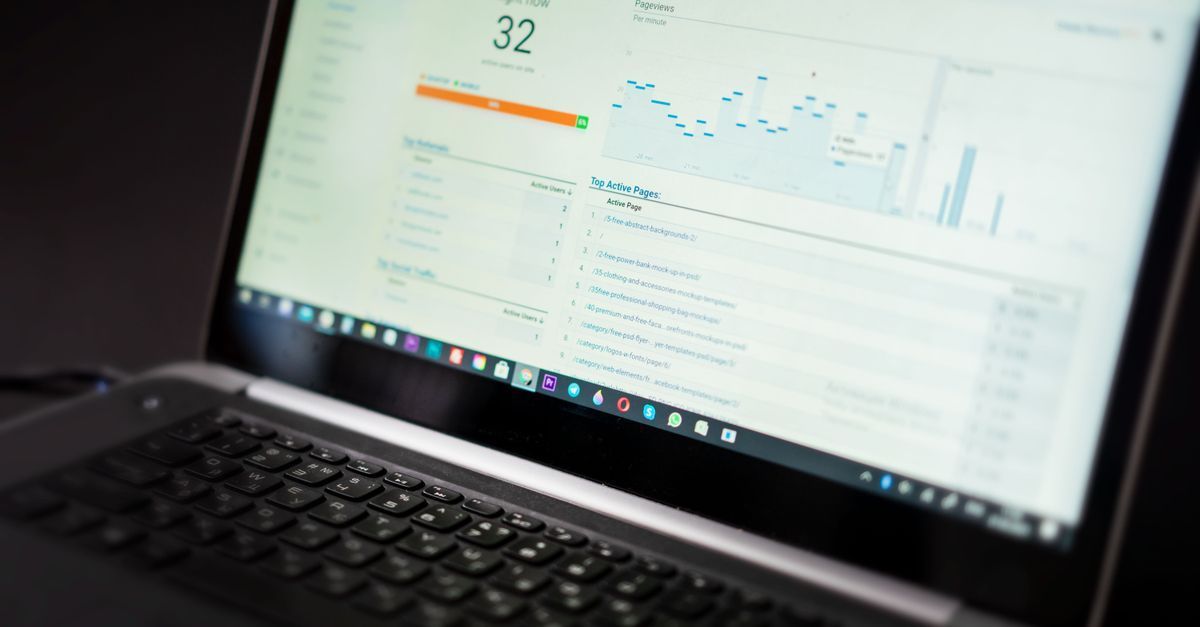
Start by reviewing the queries and pages involved in Google Search Console. Look for terms that are relevant to your services but are represented by vague titles or descriptions. Then test clearer messaging that communicates the audience, service, location, or outcome.
Do not change everything at once. Prioritize pages with strong impressions and meaningful business relevance. That gives you a better chance of learning which improvements influence behavior.
2. Pages with visits but no inquiries
A page can attract visitors and still fail to generate conversations. When this happens, the problem may not be visibility. It may be the next step.
A visitor might not inquire because:
- The page does not explain what happens after contacting you.
- The call to action is difficult to find.
- The content answers a general question but does not connect to a service.
- The form asks for too much information.
- The page lacks proof, examples, reviews, or clear differentiators.
- The visitor is not ready to buy yet and needs a lower-pressure option.
Review the page as a first-time customer. Can someone quickly understand who you help, what you provide, where you work, and why they should trust you? Can they call, submit a form, or request information without searching for the next step?
A strong page does not need to be aggressive. It needs to be clear. Calls to action can include “Request a consultation,” “Ask for an estimate,” “See how the process works,” or “Call 443-532-6467.” The best option depends on the customer’s readiness and the service being offered.
For website improvements, compare your page against adPRO’s web design services and our web design process . A useful design should support both search visibility and customer action.
How can you improve a high-traffic page?
Use a simple review process:
- Identify the page’s primary search intent.
- State the business value near the top of the page.
- Add one prominent, relevant call to action.
- Support the claim with proof such as reviews, results, credentials, or examples.
- Remove distractions and shorten unnecessary form fields.
Track the change after allowing enough time for meaningful data. Look at inquiries, calls, booked appointments, and qualified leads—not just button clicks.
3. Search visits without conversions
A page gaining search visits without conversions deserves a closer look. This signal is different from having no traffic at all. It means search engines are sending people, but the page may not be attracting the right audience or helping visitors decide.
Possible causes include a mismatch between the keyword and the service, weak local relevance, unclear pricing expectations, slow page performance, or a lack of confidence-building information. Sometimes the page ranks for a question that is useful but not commercially urgent.
Separate traffic by page, query, location, device, and landing-page behavior. A page may perform well on desktop but create friction on mobile. Another may attract visitors from outside the service area. These details can change the recommended action.
For local businesses, include accurate service areas and location-specific context without forcing keywords into every sentence. Make it easy to understand whether you serve Southern Maryland, another Maryland region, or customers across the United States.
Consider connecting SEO reporting with analytics and call tracking where appropriate. The objective is not to assign every sale perfectly. It is to create a more dependable view of which pages contribute to growth.
A practical SEO measurement framework
Use these three comparisons in a regular review:
| SEO number | What it reveals | Recommended question | |---|---|---| | Impressions versus clicks | Whether visibility earns attention | Is the result relevant and compelling? | | Visits versus inquiries | Whether the page creates action | Is the next step clear and easy? | | Visits versus conversions | Whether traffic supports growth | Are the audience and offer aligned? |
Review the numbers monthly, while checking important changes more often. Avoid judging performance from one week of data, especially when search demand is seasonal or the site has recently changed.
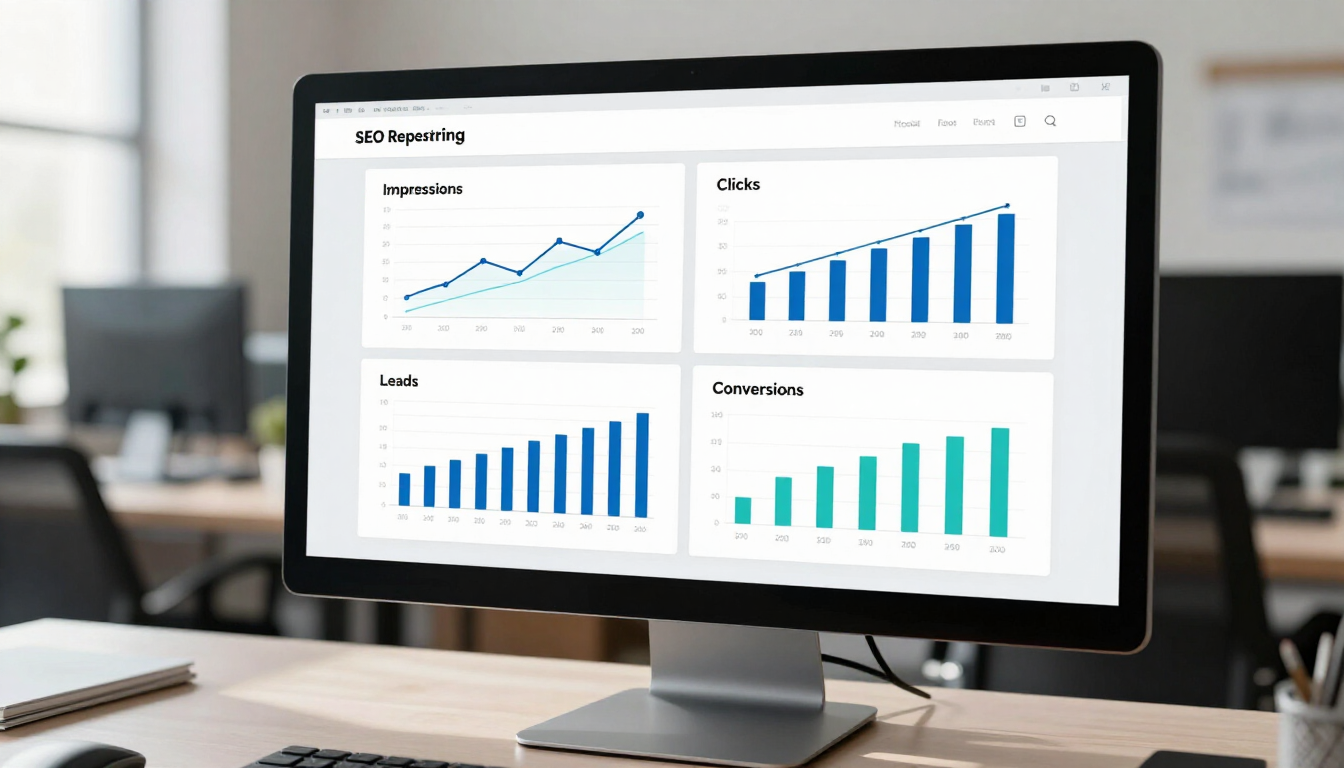
A good report should combine search data with business outcomes. Include qualified inquiries, booked work, revenue opportunities, and customer quality when those figures are available. This prevents the team from optimizing for traffic that looks impressive but does not help the company.
Common reporting mistakes to avoid
- Treating impressions as proof of success.
- Comparing unrelated pages without considering search intent.
- Counting every inquiry as equally valuable.
- Changing multiple elements before measuring the previous change.
- Ignoring phone calls, offline sales, and assisted conversions.
A useful report should lead to a decision. If the data does not suggest what to review, improve, test, or stop, it may contain too many numbers and not enough context.
What should a business owner do next?
Begin with your three highest-value pages. Compare impressions with clicks, visits with inquiries, and visits with conversions. Mark each page as an attention problem, action problem, or alignment problem. Then choose one improvement based on the evidence.
If you need a broader review, request a free website consultation or contact adPRO at 443-532-6467 . You can also visit our reviews to learn how other businesses have worked with the agency.
Key takeaway
The most useful SEO numbers are not simply total visits. Impressions compared with clicks show whether search visibility earns attention. Visits without inquiries reveal whether a page makes the next step clear. Visits without conversions indicate that the audience, offer, or experience may need closer review. Use these three comparisons to focus your marketing on qualified activity and measurable business outcomes. Start with your most important pages, make one evidence-based improvement, and evaluate the results before making the next change.
It's Your Business, Let's Build it!
We will get back to you as soon as possible.
Please try again later.