5 Marketing Channels to Grow Your Business
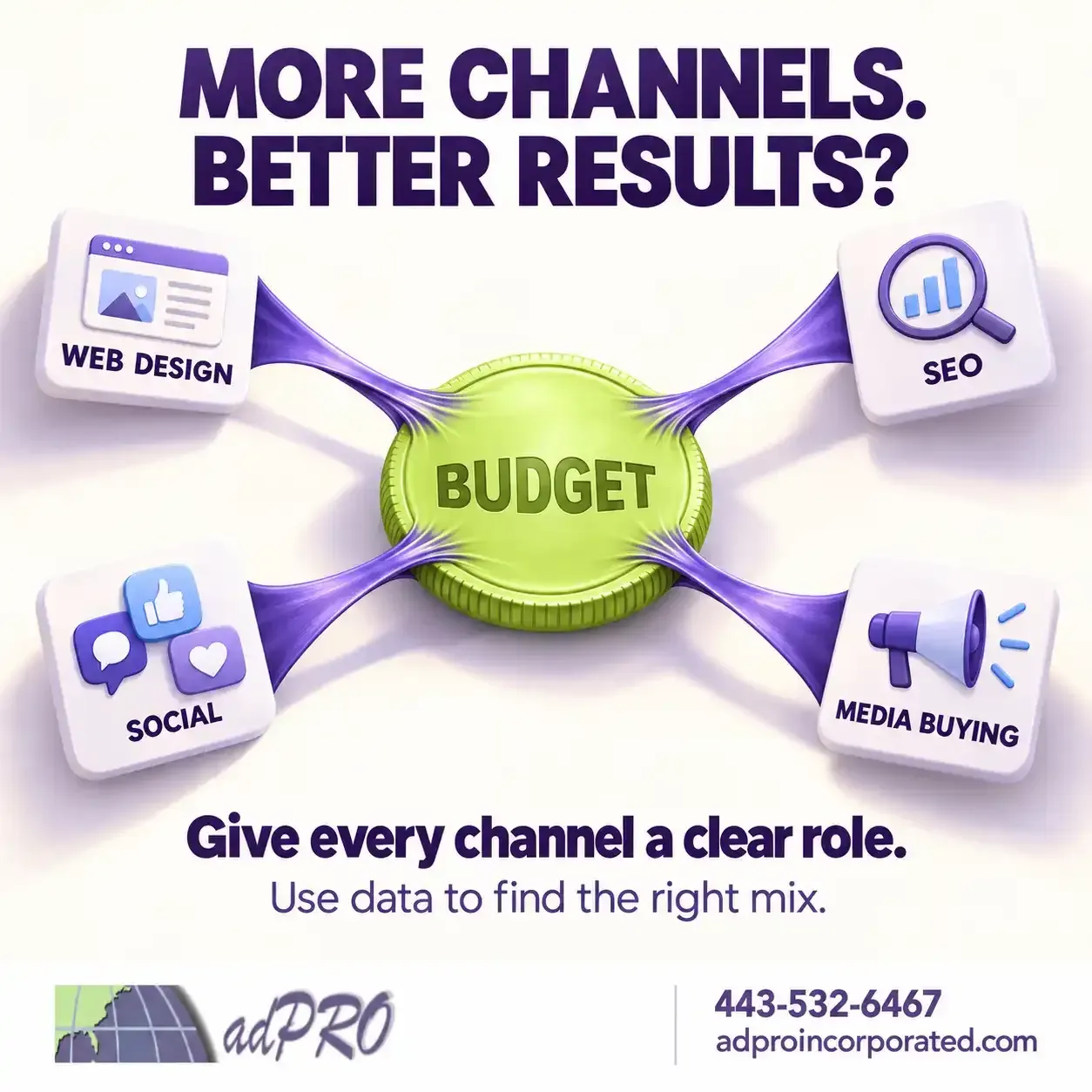
Marketing channels are the ways a business reaches, informs, and persuades potential customers, including its website, search engine optimization, social media, and advertising. The right mix does not mean appearing everywhere. It means giving each channel a clear job, measuring results, and investing more in the channels that move qualified prospects toward action.
Why can more marketing channels produce fewer customers?

More channels can create fewer customers when a budget, message, and team are spread too thin. A business may post on social media, run ads, publish blogs, and update its website without knowing which activity creates leads or sales.
The problem is usually not the number of channels. It is the lack of a connected strategy. Each channel should support a specific stage of the customer journey:
- Awareness: Help the right people discover your business.
- Consideration: Answer questions and demonstrate credibility.
- Conversion: Make it easy to call, book, buy, or request information.
- Retention: Keep customers informed and encourage repeat business.
When every channel has the same vague goal—“get more attention”—it becomes difficult to prioritize work or evaluate performance. A clearer plan starts by identifying your ideal customer, the action you want them to take, and the channel most likely to influence that action.
What are the most important marketing channels?
There is no universal marketing mix. However, most service businesses benefit from combining owned, earned, and paid channels rather than relying on only one source of attention.
1. Website design: Your conversion foundation
Your website is often the place where interested prospects decide whether to contact you. It should explain what you do, who you serve, why you are credible, and what someone should do next.
A strong website should include:
- Clear service pages written for customer needs
- Simple navigation and mobile-friendly layouts
- Trust signals such as reviews, experience, certifications, and case studies
- Prominent calls to action
- Fast loading and accessible content
Good website design is more than visual appearance. It connects messaging, usability, search visibility, and conversion. If your website attracts visitors but gives them no clear next step, other marketing channels will struggle to produce results.
2. SEO: Capture existing demand
Search engine optimization helps your business appear when people are actively looking for answers, services, or products. This makes SEO different from interruption-based advertising: the prospect has already expressed a need.
Effective SEO usually combines:
- Keyword and customer research
- Useful service and location pages
- Technical website improvements
- Helpful educational content
- Local listings and reputation signals
Explore search engine optimization to learn how organic visibility can support long-term lead generation. SEO often takes time, but it can become one of the most efficient marketing channels because useful pages may continue attracting qualified visitors after publication.
3. Social media: Build familiarity and trust
Social media is useful for showing the people, work, ideas, and values behind your business. It can keep your company visible between buying decisions and give prospects additional reasons to trust you.
Social media works best when content has a purpose, such as:
- Demonstrating expertise
- Answering frequent customer questions
- Showing completed work or behind-the-scenes activity
- Sharing reviews and community involvement
- Directing interested people to a relevant page
It is not always the best channel for immediate conversion. Treat it as a relationship and credibility channel unless your data proves it consistently drives direct revenue. Social media management can help maintain consistency without allowing social posting to consume the entire marketing budget.
4. Paid advertising: Create targeted opportunities
Paid search, display, social, radio, print, and other media can put an offer in front of a carefully selected audience. Advertising is especially helpful when you need faster visibility, are launching a service, or want to test demand.
Paid campaigns need more than attractive graphics. They require:
- A defined audience and geographic area
- A specific offer or business outcome
- Landing pages that match the ad message
- Conversion tracking
- Ongoing testing and budget adjustments
Google Ads can capture high-intent searches, while broader media buying may help build awareness. The right choice depends on your customer, sales cycle, competition, and available data.
5. AEO and content: Answer questions before the sales call
People increasingly ask search engines and AI tools complete questions rather than entering short keywords. Answer engine optimization helps organize content so it is easier to understand, extract, and cite.
Answer common questions directly, use descriptive headings, define specialized terms, and support claims with clear evidence. AEO and GEO optimization can complement traditional SEO by making your expertise more visible in conversational search experiences.
How should you choose the right marketing channels?
Start with customer behavior rather than industry trends. Ask where potential customers discover businesses like yours, what information they need before contacting you, and how long they typically take to decide.
Then evaluate each channel against four practical questions:
- Can we reach the right audience here? A large audience is not useful if it rarely includes qualified buyers.
- Can we deliver consistently? A channel that depends on content you cannot maintain may not be sustainable.
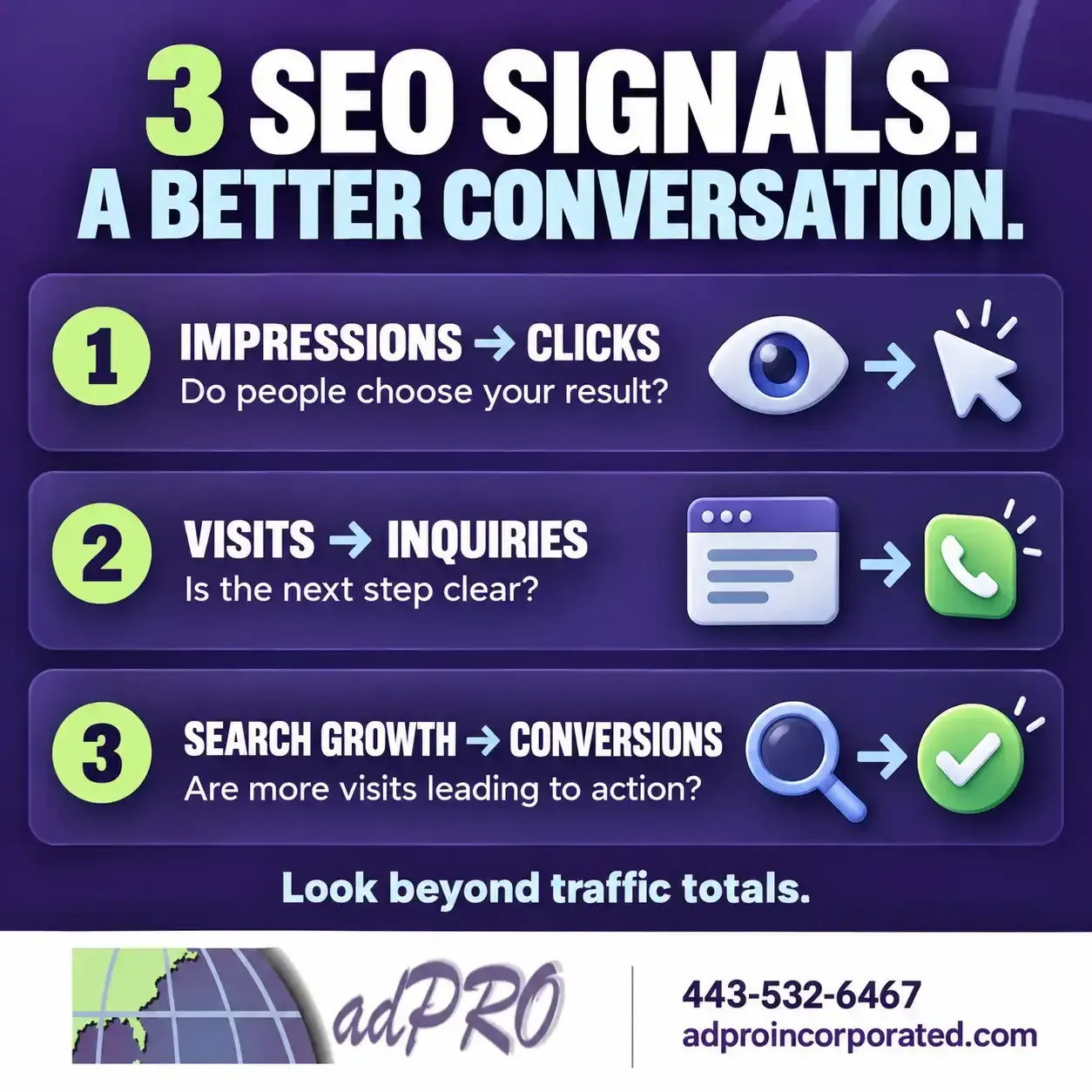
- Can we measure meaningful actions? Track calls, forms, appointments, purchases, or qualified conversations—not just impressions.
- Can the channel support our sales process? Marketing should make it easier for your team to convert interest into business.
A small business may begin with a strong website, local SEO, and one focused paid campaign. Another may prioritize social proof, email, or industry-specific content. The best plan is the one that matches your resources and customer journey.
A practical framework for building your marketing mix
Use this process before adding another platform or campaign.
Step 1: Define the business outcome
Choose a measurable goal, such as generating qualified calls, increasing booked consultations, growing online sales, or entering a new service area. Avoid goals that only describe activity, such as posting five times per week.
Step 2: Identify the highest-value audience
Describe your best customers by need, location, urgency, budget, and decision-making process. A focused audience makes messaging and channel selection much easier.
Step 3: Assign every channel one primary role
For example, your website may convert visitors, SEO may capture demand, social media may build trust, and paid advertising may accelerate visibility. Channels can overlap, but clear ownership prevents duplicated effort.
Step 4: Connect the experience
An ad should lead to a relevant page. A social post should point to useful information. An SEO article should offer a logical next step. Consistent messaging reduces friction and helps prospects understand what to do next.
Step 5: Review performance regularly
Compare channel performance using the same definitions. Look at qualified leads, conversion rates, cost per opportunity, revenue, and customer quality. Give campaigns enough time to produce useful data, but do not continue spending on activity that cannot demonstrate value.
What does an integrated marketing strategy look like?
An integrated strategy makes each channel reinforce the others. For example, a local contractor might use SEO to attract people searching for a service, a helpful website page to explain the process, reviews to build confidence, and paid advertising to reach prospects during a busy season.
The channels are not competing for attention. They are moving the same prospect through a connected path:
- Search creates discovery.
- The website provides answers and proof.
- Reviews reduce perceived risk.
- Advertising increases timely visibility.
- Follow-up turns interest into a conversation.
This approach also makes reporting more useful. Instead of asking which channel “won,” you can see how multiple touchpoints contributed to a customer’s decision.
Common marketing channel mistakes to avoid
- Choosing channels because competitors use them: Their audience, budget, and sales process may be different.
- Measuring attention instead of outcomes: Reach and clicks matter only when they support a business goal.
- Sending every visitor to the homepage: Relevant landing pages usually make the next step clearer.
- Changing strategy too quickly: Constant resets prevent meaningful learning.
- Ignoring the website experience: Marketing cannot compensate for confusing navigation, weak messaging, or difficult contact options.
A digital marketing and advertising plan should account for both promotion and the experience that follows the click.
How do you know when to change your marketing mix?
Change your mix when customer behavior, business goals, or performance data changes. You may need a different approach if qualified leads decline, acquisition costs rise, a service area expands, or your website no longer reflects what customers need.
Before replacing a channel, check whether the issue is execution. A campaign may underperform because of a weak offer, poor targeting, slow landing page, inconsistent follow-up, or incomplete tracking. Fix the constraint you can identify before making a major investment shift.
Key takeaways
The best marketing channels are not the ones that create the most noise. They are the ones that consistently connect your business with the right people and help them take the next step. Give your website, SEO, social media, content, and advertising distinct roles. Measure qualified actions instead of surface-level activity, then use the results to refine your mix. If you are unsure where to begin, review your current customer journey, identify its biggest gap, and build one focused improvement around it. Contact adPRO at 443-532-6467 to discuss a more connected growth plan.
It's Your Business, Let's Build it!
We will get back to you as soon as possible.
Please try again later.