


Why Ongoing SEO Is Necessary (Not a One-and-Done Project)
You finally hit page one. Your website's SEO project wrapped up, rankings climbed, and the phone started ringing more. It's tempting to check the box and move on to the next thing on your to-do list. But here's what many small business owners learn the hard way: those rankings don't stay put on their own. SEO isn't a project with a finish line — it's more like landscaping. Stop maintaining it, and the weeds come back.
At adPRO, we manage SEO for dozens of small businesses across Southern Maryland, and one pattern shows up again and again: the sites that keep climbing are the ones getting ongoing attention, and the sites that plateau (or quietly slide backward) are almost always the ones that treated SEO as a one-time setup instead of an ongoing practice.
Here's why ongoing SEO isn't optional if you want to protect the investment you've already made — and keep growing from here.
1. Search Engines Change the Rules Constantly
Google runs thousands of algorithm updates every year. Most are minor, invisible tweaks. But several times a year, a "core update" rolls out that meaningfully reshuffles rankings — rewarding certain kinds of content and page experiences, and penalizing others. A strategy that worked perfectly in January can lose effectiveness by summer, not because your business changed, but because the underlying scoring system did.
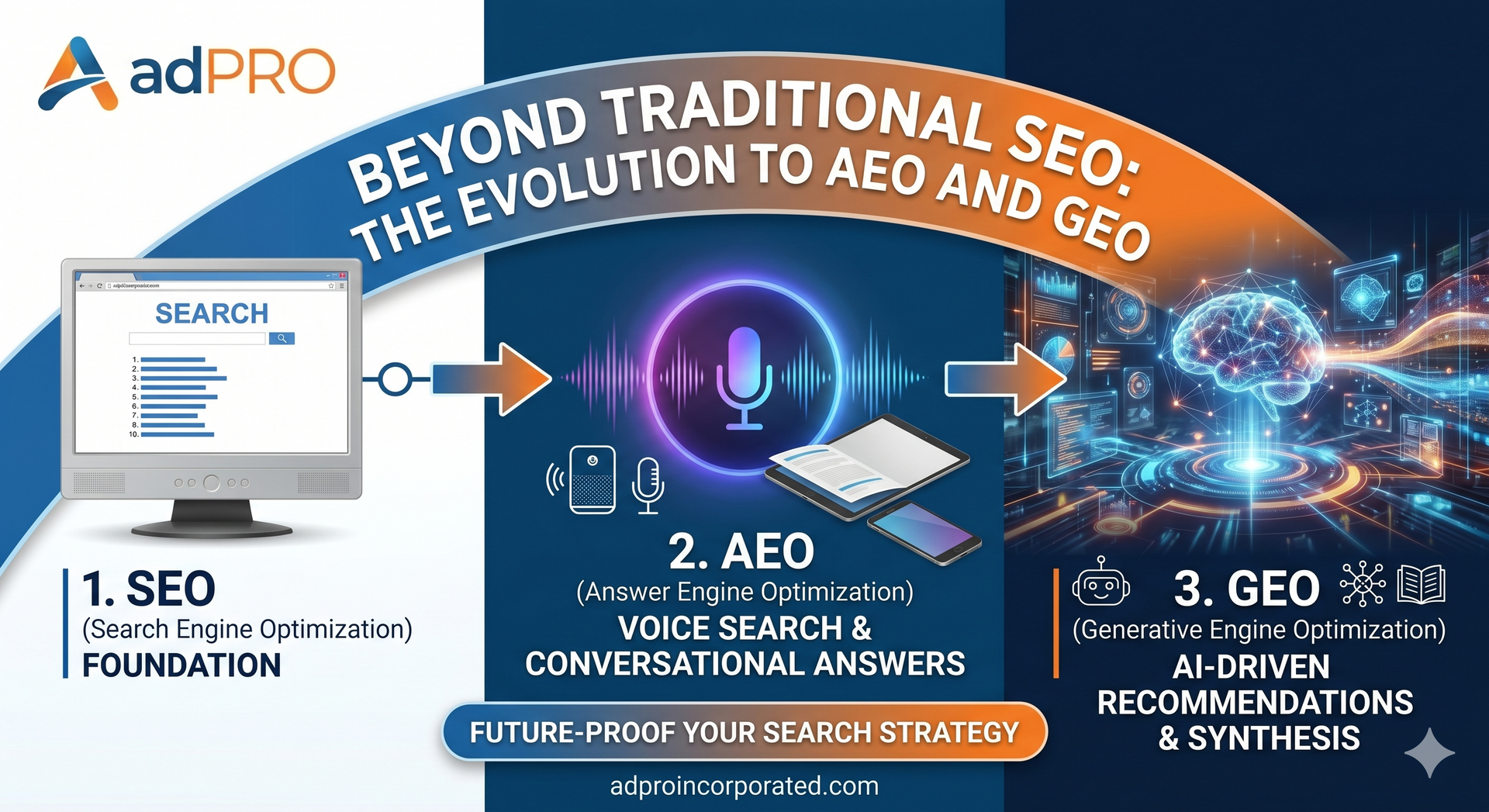
On top of traditional algorithm shifts, search itself is evolving. AI-generated answers, AI Overviews, and chat-based assistants are increasingly standing between your business and the person searching for it. Being visible in those AI-driven answers — sometimes called AEO or GEO — requires a different kind of ongoing optimization than classic blue-link SEO alone. A site that was optimized only for 2023's Google is already behind for how people search today.
Staying current means someone needs to be watching these shifts, testing what still works, and adjusting your site's content and structure accordingly. That's not a one-time task; it's a standing responsibility.
2. Your Competitors Aren't Standing Still
SEO is fundamentally relative. It doesn't matter how good your website is in isolation — what matters is whether it's better optimized than the businesses competing for the same customers. If a competitor down the road hires an SEO team, starts publishing new content monthly, and builds fresh local citations, they can climb past you even if your site hasn't changed a bit.
We see this constantly with local service businesses in Calvert, St. Mary's, and Charles counties: HVAC companies, contractors, marine services, pest control — competitive local markets where a handful of businesses are all fighting for the same "near me" searches. Rankings in these markets shift monthly based on who is actively investing in SEO right now, not who invested well a year ago.
Ongoing SEO means regularly checking where you stand against competitors, identifying new opportunities they haven't claimed yet, and making sure you don't fall behind while someone else pulls ahead.
3. Fresh, Relevant Content Signals an Active, Trustworthy Business
Search engines favor websites that show ongoing signs of life. A site with a blog that hasn't been updated in two years, service pages that never mention new offerings, and no recent reviews or citations sends a quiet signal: this business might not be very active anymore. Search engines pick up on that, and so do potential customers browsing your site.
Regularly publishing new content — blog posts, updated service pages, seasonal offers, new project photos — does double duty. It gives search engines fresh material to crawl and index, which helps you rank for new keyword variations and long-tail searches you weren't capturing before. And it gives real visitors a reason to trust that you're an active, established business worth calling.
This is also where local businesses can capture "long-tail" searches — the very specific questions people type in, like "how often should I service my well pump in Southern Maryland" — that a static homepage will never rank for, but a growing library of content can.
4. Technical Issues Quietly Build Up Over Time
Websites aren't static once they're launched. Plugins update, new pages get added, images get uploaded without proper file sizes, and broken links accumulate as pages get moved or removed. Each of these small issues might not tank your rankings overnight, but they add up — slower load times, broken internal links, duplicate content, or pages that accidentally became unindexable.
Ongoing SEO includes routine technical audits that catch these problems before they compound. Think of it like a car: skipping oil changes doesn't cause a breakdown the first time, but neglect it long enough and eventually something expensive fails. Regular technical SEO checkups catch the small stuff — a missing meta description, a slow-loading page, a broken form — while it's still cheap and easy to fix.
5. Local SEO Requires Consistent Upkeep
For most of our Southern Maryland clients, local search is where the real business comes from — Google Business Profile visibility, local map pack rankings, and location-specific search terms. But local SEO isn't a set-it-and-forget-it exercise either. Google Business Profiles need regular posts and updated photos. Citations across directories need to stay accurate and consistent. New reviews need responses. Service area pages need to reflect current offerings and locations.
Businesses that actively maintain their local presence tend to hold or improve their map pack position. Businesses that set it up once and walk away tend to get quietly outranked by competitors who are still showing up.
The Bottom Line
SEO isn't a purchase you make once — it's an ongoing practice, closer to fitness than to a home renovation. The work you did to get your rankings up is real and valuable, but it's not permanent. Search engines keep changing, competitors keep pushing, and your own site needs fresh signals to keep proving it deserves that spot on page one.
The businesses that treat SEO as an ongoing part of how they operate — rather than a project with an end date — are the ones that keep showing up when it matters. If you're not sure where your site currently stands, that's usually the best place to start.
It's Your Business, Let's Build it!
We will get back to you as soon as possible.
Please try again later.